Building on the water in Lakeway sounds straightforward until you look closely at what a waterfront lot actually involves. You may be imagining panoramic views, a dock, and seamless outdoor living, but the real starting point is understanding the site’s limits before design momentum takes over. If you are planning a custom home in Lakeway Estates, this guide will help you see what matters most, what can affect cost and timing, and why a feasibility-first approach protects both your vision and your investment. Let’s dive in.
Start With the Lot, Not the Floor Plan
On a Lake Travis waterfront lot, the buildable area is rarely as simple as the property lines suggest. Slope, drainage, tree canopy, shoreline conditions, submerged-land ownership, and dock feasibility can all shape what the site can realistically support.
That matters in Lakeway because Lake Travis is a water-supply reservoir designed to fluctuate. In practical terms, shoreline elevation, dock usability, and the way your outdoor spaces connect to the water should be planned as variable conditions, not fixed assumptions.
For many owners, this is the biggest mindset shift. A great waterfront home begins with what the lot can do consistently over time, not just what looks possible on paper during one lake level or one season.
Know the Rules That Shape Design
Lakeway building codes matter early
Lakeway has adopted the 2021 editions of major building codes, along with the 2023 NEC and UPC as applicable. That means your home’s design, systems, and permitting path need to align with current local standards from the start.
For a custom waterfront estate, code compliance is not just a back-end paperwork item. It affects structure, energy performance, mechanical systems, and how quickly plans can move through review.
Height limits can affect your architecture
In many residential districts, the basic height limit is 32 feet above the highest natural grade under the slab. If your property is in Lakeway’s view-protection conditional overlay, the review process can involve a ridge pole, topographic survey, and review of deed restrictions or neighborhood architectural controls.
This is one reason roof form, ceiling heights, and hillside placement should be studied early. If you wait until design is too far along, changes to massing or rooflines can become expensive and frustrating.
Private restrictions may add another layer
Public rules are only part of the picture. Deed restrictions, POA rules, and neighborhood architectural review can all add requirements beyond city code.
On a waterfront lot, those private controls can affect design character, setbacks, roof form, materials, and site improvements. A clear early review helps you avoid redesign later.
Waterfront Lots Need Dock Feasibility Review
Dock approval is not automatic
Within Lakeway, a permit is required to construct, reconstruct, replace, or install a boat dock. The city considers boating traffic, impacts on adjacent properties, and public safety.
In general, docks must stay within the side property lines extended into the lake, and Lake Travis docks may extend up to 100 feet from shore. Lakeway also caps non-main-channel docks at 1,000 square feet and flags docks over 1,499 square feet for additional LCRA permitting.
Low-water conditions change the equation
One of the most important planning realities on Lake Travis is that low-water conditions can change dock use and placement expectations. Lakeway suspends some dock-location rules when the lake falls below 670 feet msl, and LCRA’s lakebed-clearing rules change below 676 feet msl.
That means dock planning should never be treated as a small add-on after the house is designed. Access, slip placement, navigation clearance, and repositioning during low water all affect how you will actually use the property.
Submerged-land rights require attention
LCRA requires ownership or permission to use the submerged land under a fixed dock and the underwater area used for floating-dock anchors. LCRA also does not resolve private property-rights disputes.
This is why title work, survey review, and shoreline ownership questions should happen before your design team gets too far into planning. A waterfront lot is only as functional as the access and improvements it can legally support.
Plan for Slope, Drainage, and Trees Together
Drainage cannot be an afterthought
Lakeway’s design manual states that drainage should not cross property lines. On sloped waterfront lots, that can have a direct effect on where the home sits, how driveways are shaped, and how terraces, retaining elements, and hardscape are designed.
If outdoor living is planned without drainage strategy, you may end up revising grading, patios, or pool layouts later. The best approach is to coordinate site engineering and architecture from the beginning.
Tree preservation affects site layout
Lakeway requires a tree survey for new residential construction and generally requires a permit to remove protected hardwood trees. Protected trees outside the work area are expected to be preserved or mitigated.
For waterfront homes, mature trees can be both a design asset and a planning constraint. They may influence driveway alignment, home placement, view corridors, and construction access, so it is smart to evaluate them before finalizing the footprint.
Water-conscious landscaping fits the site
Lakeway’s landscaping code and LCRA watershed rules both support water-conscious landscaping, native or adaptive plants, and lower impervious cover. LCRA also offers a stormwater-credit program for projects that keep impervious cover at 15 percent or less.
For owners planning a large estate, this can influence paving choices, outdoor program size, and how landscape design supports long-term site performance. In many cases, a restrained, site-responsive approach creates a better result than trying to maximize every hardscape surface.
Watch for Watershed, Floodplain, and Utility Issues
Watershed controls may apply
LCRA’s Highland Lakes Watershed Ordinance applies to development in the Lake Travis watershed and requires runoff controls, buffer zones, erosion controls, and in some cases permits. Because LCRA also has interlocal agreements with Lakeway and Travis County, local administration can vary by project.
This is one more reason to treat feasibility as a formal phase, not an informal conversation. The approval path may involve more than one public entity, depending on the property and scope.
County shoreline and floodplain rules can matter
If a lot is outside full city jurisdiction or in the ETJ, Travis County rules can add Lake Travis shoreline setbacks of 100 feet, or 75 feet for detached single-family residential use, along with floodplain and minimum-floor-elevation requirements.
That can materially change the home’s position on the lot and the shape of the buildable envelope. Before you lock in design assumptions, confirm which jurisdictional rules apply to the specific parcel.
Utility status should be confirmed early
Lakeway is served by municipal utility districts for water and wastewater service, but not every lot will present the same conditions. If a lot is not on organized sewer, LCRA’s on-site sewage program can apply within a 2,000-foot zone around Lake Travis.
Utility and wastewater status are foundational due diligence items. They affect site planning, permitting, and sometimes the pace of pre-construction decisions.
Design the Home Around Real Constraints
Primary living spaces deserve strategic placement
Lakeway’s view-protection process focuses on preserving views from existing homes, and the code evaluates impacts from major living spaces like living rooms, dining rooms, dens, studies, home offices, kitchens, master bedrooms, decks, porches, and balconies. That makes the placement of your home’s primary living areas especially important.
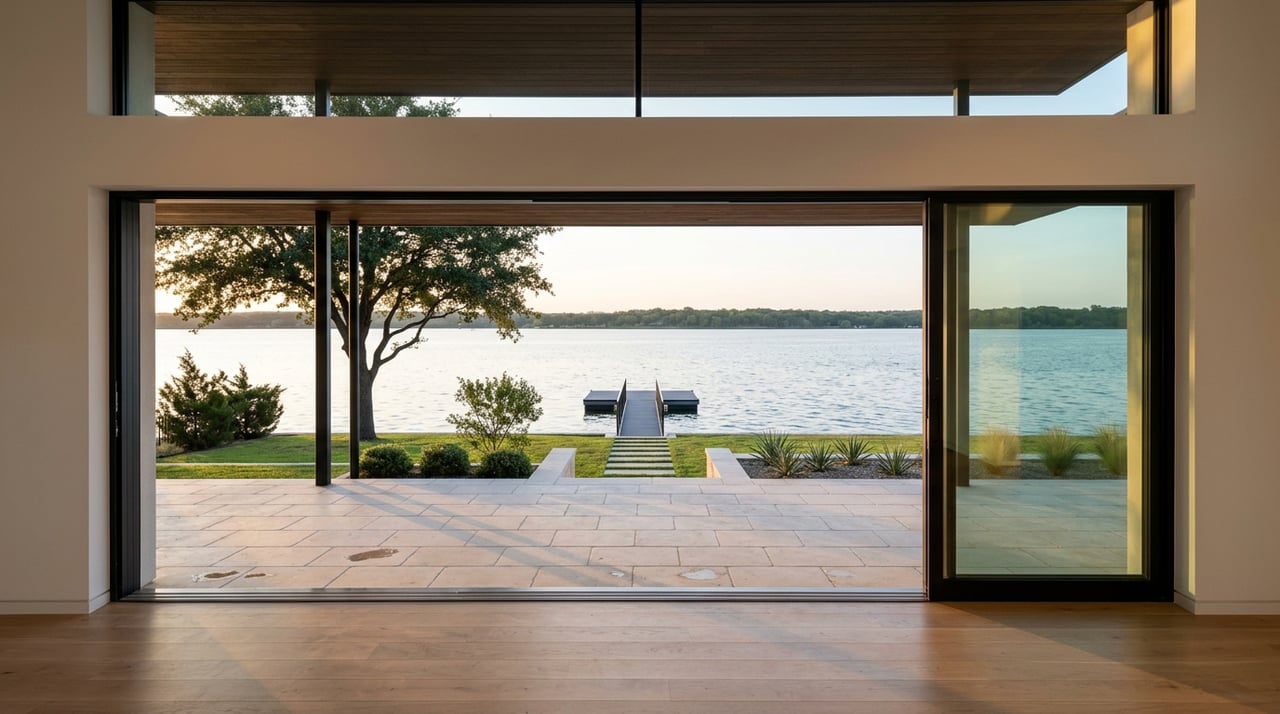
For a luxury custom home, this has real design implications. It can influence where you place expansive glazing, terraces, outdoor kitchens, and poolside entertaining spaces.
Accessory buildings have limits
If your vision includes a casita, guest house, or pool house, Lakeway allows accessory buildings only when they are incidental to the main home. Accessory dwelling units are not permitted.
That distinction matters during planning. If you want detached structures as part of a larger estate composition, they need to be designed within the city’s allowed framework.
Underground utilities may shape the site plan
Lakeway’s design manual states that new subdivision and development should be served by underground utilities. On custom homesites, that can affect planning for service routes, driveway design, and how the front approach to the home is composed.
On a high-end waterfront estate, those decisions can improve the finished look of the property. They also need to be coordinated early so they do not disrupt the architectural intent later.
A Feasibility-First Process Saves Time
Before schematic design becomes expensive, the most important tasks are usually survey, title, shoreline ownership review, dock feasibility, floodplain review, drainage analysis, utility or OSSF status, and any HOA or deed-restriction review. On a Lakeway waterfront property, these are not minor boxes to check. They define the lot’s real buildable envelope.
This is where an integrated design-build approach can create practical value. Instead of separating site evaluation, design coordination, permitting strategy, selections, purchasing, and construction oversight into disconnected handoffs, you can align the architecture with the site’s actual constraints from day one.
For complex Lakeway estates, that kind of coordination helps protect the design, the schedule, and the ownership experience. If you want a home that feels effortless when complete, the planning stage needs to be disciplined.
If you are evaluating a waterfront lot or preparing to build in Lakeway Estates, working with a single accountable team can make the process clearer from the start. David Lyne and Seven Custom Homes help owners validate lot feasibility, coordinate architecture and permitting, and guide luxury custom homes from early planning through construction.
FAQs
What should you review before buying a waterfront lot in Lakeway?
- You should review survey details, title, shoreline ownership, dock feasibility, floodplain conditions, drainage, utility or wastewater status, and any deed restrictions or HOA requirements before moving too far into planning.
Can you build a dock on any Lakeway waterfront lot?
- No. In Lakeway, docks require a permit, must follow local placement rules, and may also involve LCRA requirements, submerged-land rights, and low-water planning considerations.
How do Lake Travis water levels affect a custom home plan?
- Lake Travis water levels can affect shoreline usability, dock access, outdoor-living layout, and lakebed-related planning, so your design should account for changing lake conditions rather than assume a fixed shoreline.
Do height rules affect waterfront home design in Lakeway?
- Yes. In many residential districts, the basic height limit is 32 feet above the highest natural grade under the slab, and some properties may also be subject to Lakeway’s view-protection review process.
Can you add a guest house to a custom home in Lakeway?
- Lakeway allows accessory buildings when they are incidental to the main home, but accessory dwelling units are not permitted.
Why is a feasibility-first approach important for Lakeway waterfront construction?
- A feasibility-first approach helps you confirm what the lot can legally and practically support before design decisions become expensive, which can reduce redesign risk and support a smoother permitting and construction process.