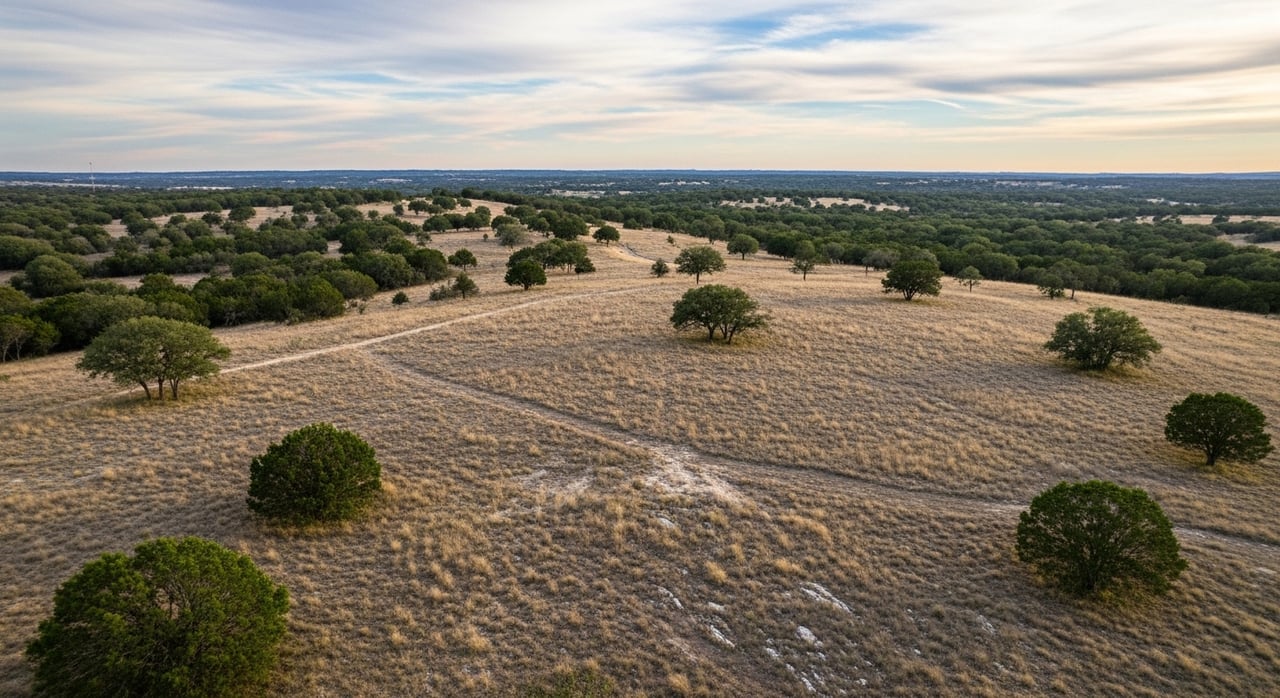
Most people underestimate how much work happens before a single wall goes up. Buying land to build a home is its own process, separate from design, separate from construction, and full of decisions that can cost you significantly if made out of order. We have been guiding Austin-area families through this exact process since 2007, and we know what makes a lot buildable, financeable, and worth every dollar you spend on it.
Have a lot in mind or just starting your search? Call us at (512) 662-1349 and we will tell you exactly what to look for.
Key Takeaways
Buying land to build a home in Austin requires evaluating zoning, utilities, and soil conditions before making an offer.
Raw land and finished lots carry very different costs, timelines, and financing requirements; knowing the difference saves money early.
Construction-to-permanent loans let you finance both the land purchase and the build under one loan product.
Land costs in Greater Austin vary significantly by location, with Hill Country parcels often priced by the acre and urban infill lots by the square foot.
Bringing a builder into your lot search early can prevent costly surprises at the permit and site-prep stage.
What Makes Lot Selection the Most Critical Step in a Custom Build
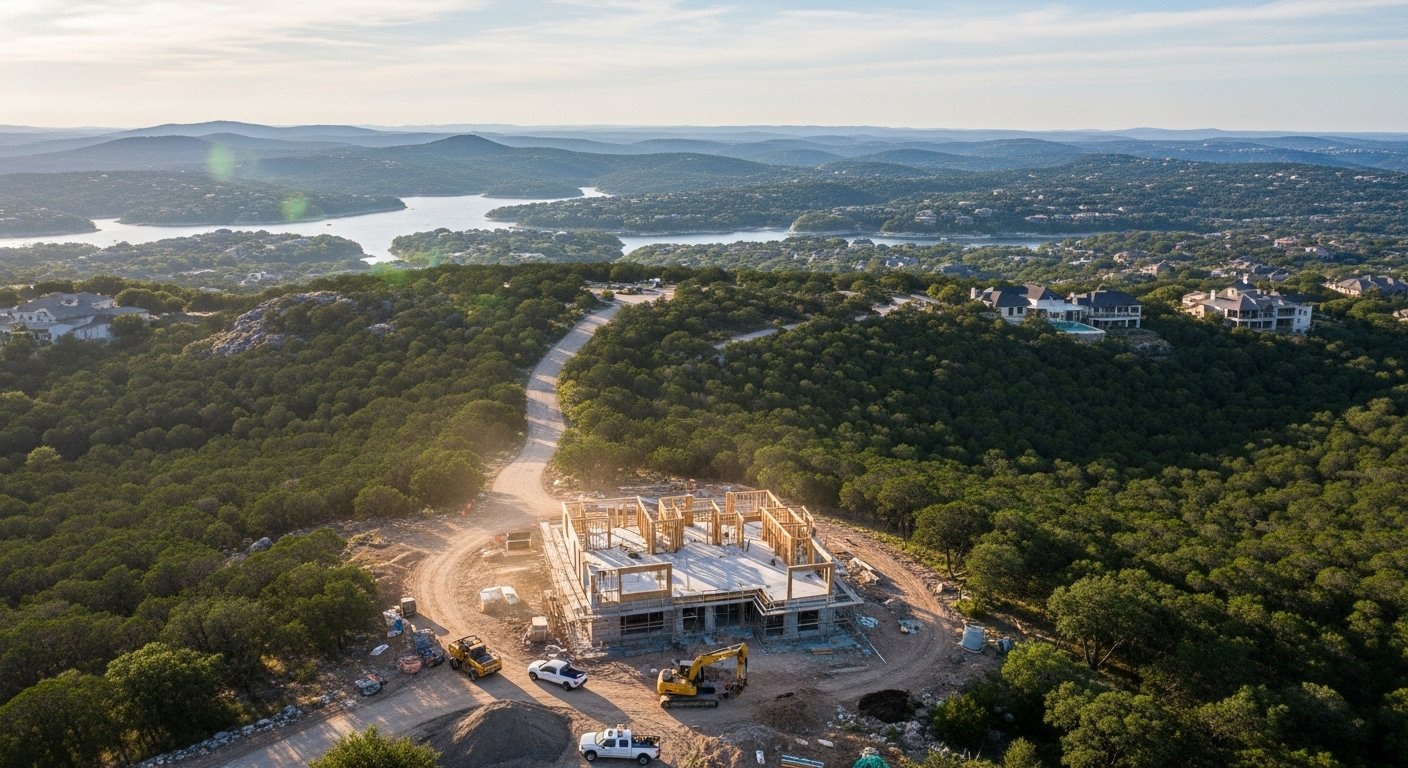
Lot selection in Central Texas is one of the most consequential decisions you will make in the entire custom home process. Finished lots are scarce in communities like Lakeway, Bee Cave, Dripping Springs, and West Lake Hills, and the due diligence required goes far beyond a standard home purchase. Since 2007, we have guided clients through every layer of that process.
This guide covers what our team evaluates before a single foundation is poured: zoning, deed restrictions, soil conditions, utility access, and construction financing. If you already have a parcel in mind, explore our build on your lot services to see how we assess a site from a builder's perspective before you commit to purchase.
Why Buying Land in Austin Is Different From Buying an Existing Home
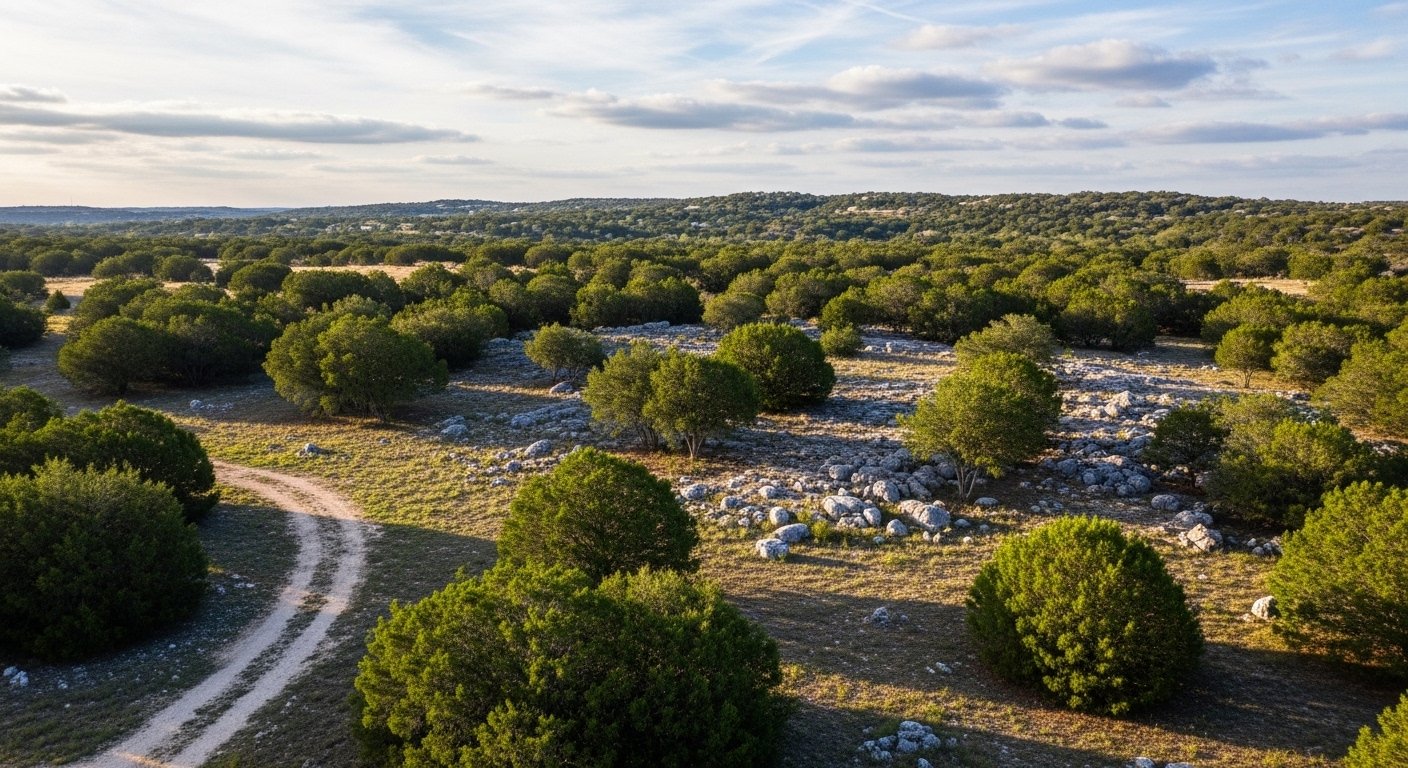
A lot purchase is not a home purchase. The financing is different, the due diligence is different, and the hidden costs can surprise even experienced real estate buyers. Before you start searching MLS listings for raw acreage or calling private sellers about Hill Country tracts, you need to understand what you are actually buying.
The Austin Land Market
Finished lots in established western suburbs like West Lake Hills (78746) and Bee Cave (78738) are genuinely scarce. Both municipalities operate their own zoning codes, independent of the city's Land Development Code, which means deed restrictions and impervious cover limits can significantly constrain your building envelope before you ever submit a permit application. Lots in these corridors are competitive and carry premium prices to match.
Further out in Driftwood, Spicewood, and Horseshoe Bay, raw acreage is more available, but site development costs can equal or exceed the land purchase price itself. Cedar clearing, grading, septic permitting, and utility runs add up fast on rural Hill Country tracts. You need that number before you make an offer, not after.
What Is a Finished Lot vs. Raw Land?
A finished lot has utilities stubbed to the property line, road access, and a recorded plat. Raw land has none of that. In areas like Tarrytown and the 78703 zip code, finished urban infill lots are rare and expensive but require almost no site preparation work. That trades a high purchase price for a predictable build timeline. Raw acreage in the Hill Country trades lower land cost for significant pre-construction investment and more scheduling unknowns.
Conventional 30-year mortgage financing does not apply to land purchases. Raw land typically requires a land loan with a higher down payment and shorter term. Most clients who plan to build immediately move toward a construction-to-permanent loan, which rolls the land and build costs into a single structure. Our build-on-your-lot process is designed to work alongside that financing path from the first conversation.
The 6 Critical Due Diligence Steps Before You Buy a Lot
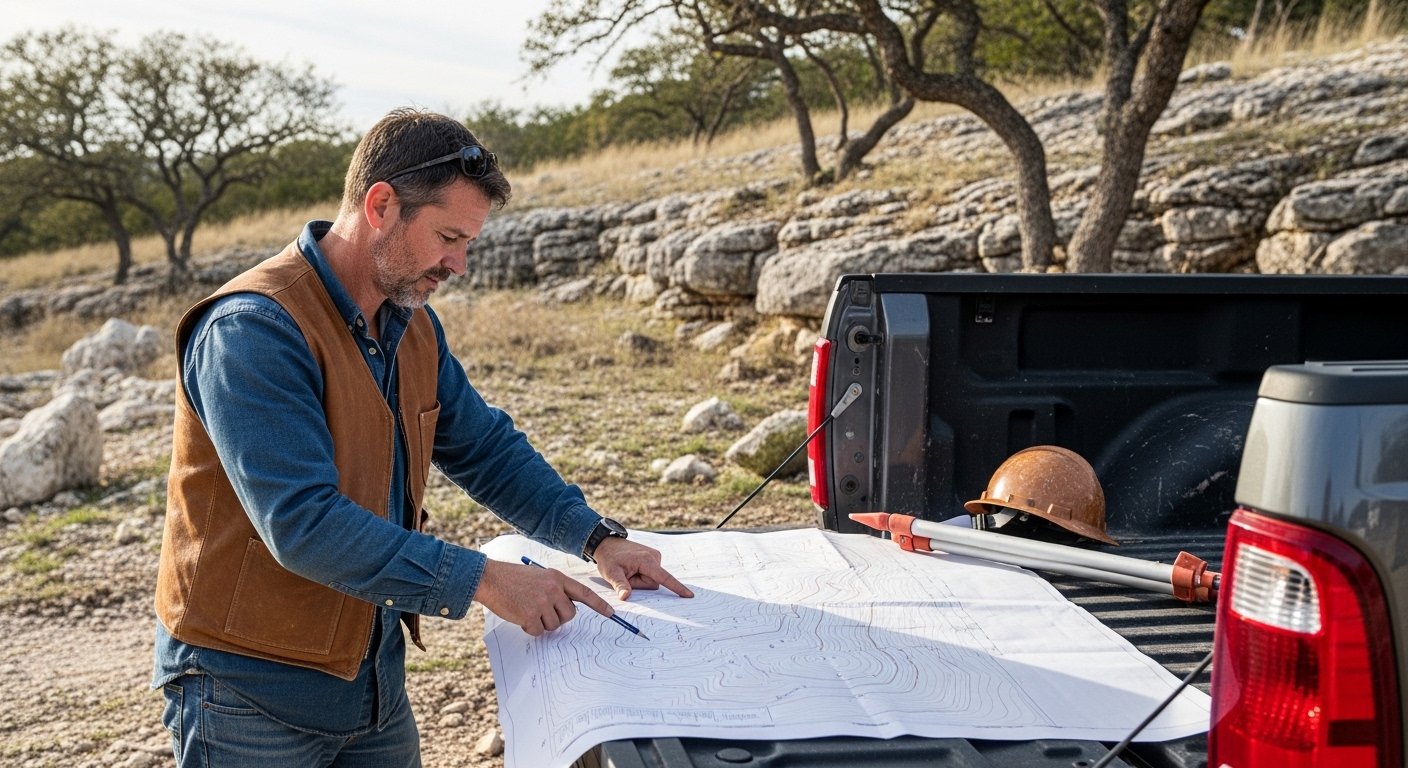
Every lot looks promising on a listing sheet. The real story lives in the soil, the flood maps, and the municipal code. These six steps are what our team walks through before a single design drawing is made, and skipping any one of them can cost you far more than the lot itself.
Step 1: Zoning and Deed Restrictions
Confirm the zoning category before anything else. Inside city limits, Austin's Land Development Code uses residential categories including SF-1, SF-2, SF-3, and RR (Rural Residential). Each carries distinct minimum lot sizes and setback requirements that directly shape what you can build.
Outside city limits, municipalities like Bee Cave and West Lake Hills apply their own independent zoning codes, which are stricter in several categories than the base Austin code. Layer deed restrictions on top of zoning, and the buildable envelope can shrink considerably.
Use the City of Austin Development Portal to pull zoning records before you make an offer. Understanding these constraints early is what keeps the custom home construction process on schedule and on budget from day one.
Step 2: Survey and Topographic Analysis
A topo survey maps every grade change across the lot. This is not optional on Hill Country terrain. Lots with 15 to 30 foot grade changes west of Mopac commonly require pier-and-beam foundations rather than a standard post-tension slab, and unplanned site work on those grades can run $30,000 to $80,000 before a single wall goes up. We require a topographic analysis on every lot we evaluate, regardless of how flat it looks in the listing photos.
Step 3: Utility Availability
Utility infrastructure varies sharply across Greater Austin. Inside city limits, you have Austin Energy and Austin Water. Outside, you may be looking at Pedernales Electric, Bluebonnet Electric, a private well, or a rural water supply corporation. In areas like Driftwood and Spicewood, propane is the standard for gas service. Extending utilities to a rural tract can cost $20,000 to $50,000 or more depending on distance from the nearest connection point. Confirm every utility source in writing before closing.
Step 4: Soil and Perc Testing
The Edwards Plateau geology that defines much of the Hill Country means expansive, clay-heavy soils over limestone karst. This directly affects foundation design and septic feasibility. If the lot requires an on-site sewage facility (OSSF), a percolation test is required for permitting through Hays County Environmental Health or Travis County Health and Human Services, depending on location. Do not assume a lot will pass the perc test simply because neighboring lots have septic systems. Soil conditions can change dramatically within a few hundred feet.
Step 5: Flood Zone Status
Check the FEMA Flood Map Service Center at msc.fema.gov and cross-reference Austin's Flood Pro tool for local detail. Zone AE and Zone A designations restrict the buildable area on a parcel and carry mandatory flood insurance requirements that raise long-term ownership costs. The Colorado River floodplain is particularly relevant for lots near Spicewood and Horseshoe Bay. Flood zone overlaps are not always obvious from a street-level view of the property.
Step 6: Setbacks, Impervious Cover, and Tree Protections
These three rules work together to define your true buildable footprint. Austin's Heritage Tree Ordinance protects any oak 19 inches in diameter or larger, and building within the critical root zone requires a formal variance. Impervious cover limits for SF-3 zoning sit at 45%, but drop to 25% or lower in areas near the Barton Creek watershed and Bee Cave. Add required setbacks on all four sides, and the actual area available for a home, garage, and outdoor living space can be far smaller than the total lot acreage suggests.
This is why how to buy land and build a house is not a single question. It is a layered analysis that requires local expertise to get right. If you have a lot in mind in Cedar Park, Lakeway, or anywhere across the Hill Country corridor, our team will walk through all six of these steps with you before you commit. Reach out to start a lot evaluation conversation.
How to Finance Land and a Custom Home Build
Financing a lot purchase and a custom build are two separate processes, and most buyers don't realize that until they're already under contract. Understanding how these loan types work before you make an offer gives you a real advantage in a market that moves quickly.
Construction Loans vs. Construction-to-Permanent Loans
A construction loan is a short-term, interest-only line of credit that funds your build in stages as work is completed. Funds are released in draws tied to verified progress milestones, and the loan term is typically 12 to 18 months. Once construction wraps, you refinance into a standard mortgage. That second closing means a second round of closing costs.
A construction-to-permanent loan wraps both periods into one closing. You lock your rate once, pay one set of closing costs, and the loan converts automatically when the certificate of occupancy is issued. For a luxury build in the $800K to $2M+ range common in the Texas Hill Country corridor through Georgetown, Dripping Springs, and the Leander area, this structure often saves significant money and removes one approval cycle from the process.
Lenders for these loan sizes typically require 20 to 25% down, an approved set of plans, and a signed construction contract before they fund a single draw.
Land Loans and Lot Financing
A land loan is not a mortgage, and lenders treat it that way. Because raw land produces no income and is harder to sell quickly, lenders consider it higher-risk collateral. Expect interest rates 1 to 2 percentage points above a standard mortgage rate, shorter repayment terms, and stricter underwriting.
In the Central Texas market, lenders actively originating lot loans include Texas Farm Credit, Capital Farm Credit, Frost Bank, and Amplify Credit Union. Each has different appetite for rural acreage versus platted subdivisions. If you own a lot free and clear and want to use that equity in a future construction loan, lenders will require a current appraisal and a clear building plan. Buying land now and building later is possible, but you need a credible timeline to show the lender.
Budgeting Beyond the Lot Price
The lot price is the smallest number in your total project budget. Here is what buyers consistently underestimate:
Survey and title: $1,500 to $3,500
Soil testing and geotechnical report: $500 to $2,000
Utility connections: $5,000 to $50,000 or more, depending on proximity to existing infrastructure
Site clearing and grading: $10,000 to $40,000 on sloped Hill Country terrain
City of Austin water and wastewater impact fees: $3,000 to $10,000 or more per unit
Architectural design and permit fees: typically 8 to 15% of total construction cost
The clearing and grading line item surprises people most. A lot with elevation changes and cedar coverage in the Hill Country costs significantly more to prepare than a flat, utility-served suburban lot. Working with a builder who manages all of this inside a single design-build process means these costs are scoped before you break ground, not discovered after.
Ready to find a lot and build the home you actually want? Our team has guided clients through every step of this process since 2007, from lot evaluation and zoning research to design, permits, and construction. Call Seven Custom Homes at (512) 662-1349 or visit us at 312 Medical Parkway, Bldg B, Austin, TX 78738 to start a conversation about your project. The land market moves fast. The more you know before you make an offer, the better your outcome.
Frequently Asked Questions
How Long Does It Take to Build a Custom Home After Buying Land in Austin?
From lot purchase to move-in, most custom home projects in Austin take between 14 and 24 months when accounting for design, permitting, and construction. Permitting timelines with the City of Austin can run 3 to 6 months on their own, depending on project complexity and current review backlogs. Seven Custom Homes works with clients early in the design phase to anticipate those delays and keep the overall schedule realistic.
Can I Buy Land Now and Build Later?
Yes, but holding raw land while waiting to build carries ongoing costs including property taxes, loan interest if financed, and potential liability for maintaining the lot. Most lenders also require you to begin construction within a set timeframe, often 12 to 24 months, before converting or refinancing a land loan. It is worth discussing a phased timeline with Seven Custom Homes before closing on the lot so your financial and design plans stay aligned.
Is It Cheaper to Buy Land and Build Than to Buy an Existing Home in Austin?
Not always, and the comparison depends heavily on finishes, lot costs, and where you are building. In many Austin neighborhoods, existing home prices reflect limited inventory premiums that can make a custom build competitively priced for the square footage and quality you receive. The key advantage with a custom build is that you control where the money goes rather than paying for someone else's outdated selections or deferred maintenance.
What Happens If Problems Are Found After I Already Own the Land?
Issues discovered post-closing, such as poor soil bearing capacity or unmarked easements, can significantly increase your build cost or limit what you can construct. Some problems like soil conditions can be addressed through engineered foundations, though that adds expense. This is exactly why Seven Custom Homes encourages buyers to conduct full due diligence before closing rather than treating it as optional.
Do I Need a Builder Before I Make an Offer on a Lot?
Involving a builder before making an offer is strongly recommended because experienced builders can spot red flags that a real estate agent alone may not recognize. Seven Custom Homes regularly assists clients in evaluating lots prior to purchase, reviewing topography, utility access, and local restrictions that affect both buildability and budget. Going under contract without that input can lead to expensive surprises or, in some cases, a lot that cannot support your intended home design.
Are There Restrictions on Cutting Down Trees When Building in Austin?
Austin has one of the more protective tree ordinances in Texas, covering heritage trees with a diameter of 19 inches or more at breast height. Removing or significantly pruning a protected tree typically requires a permit, an arborist report, and sometimes mitigation fees or replacement planting. Your site plan must account for tree canopy early in the design process to avoid costly redesigns or regulatory delays later.
What Credit Score Do I Need to Qualify for a Construction Loan in Austin?
Most lenders offering construction loans require a minimum credit score of 680 to 720, though some programs for construction-to-permanent financing set the bar closer to 740 for the best rates. Lenders also scrutinize debt-to-income ratios and cash reserves more carefully on construction loans than on standard mortgages because the collateral does not yet exist as a completed home. Speaking with a lender who specializes in new construction before you start lot shopping gives you a clear budget ceiling and avoids surprises at contract time.
Ready to Get Started with Seven Custom Homes?
Call (512) 662-1349 to speak with our team directly. We are ready to answer your questions, walk you through your options, and help you find the right solution for your needs. Whether you're just starting to plan or ready to move forward, we will make the process simple and stress-free. Reach out today and we will talk about how we can help.