Ask anyone shopping the gated sections of Barton Creek what a home in Amarra costs, and they will tell you the range they saw on the first search: somewhere between $2 million and $6 million, with recent sales clustering in the upper $4 millions to about $5 million. That number gets repeated so often it starts to feel like the whole answer. It isn't. The home price is where the real math starts, not where it ends, and the gap between what a listing shows and what an Amarra address actually costs to hold is wider here than almost anywhere else inside Barton Creek's gates.
The Number the Comparison Sites Don't Run
Barton Creek is not one neighborhood behaving like eleven. It is closer to eleven separate residential communities inside one 2,500-acre master plan, and each one sets its own homeowners association dues based on what it maintains: private roads, gate staffing, common grounds, architectural review. That structure means the HOA line on an Amarra closing statement bears almost no resemblance to the HOA line on a home two gates over.
An MLS-derived sample of 37 addresses across 42 listings, current as of June 2026, lays the gap out plainly:
| Barton Creek Enclave | Typical HOA Dues (monthly) |
|---|---|
| Estates Above Lost Creek | $51 to $82 |
| ABC West / Wimberly / Woods / North | $125 to $217 |
| Verano / Barton Creek Southwest / Portofino | $162 to $307 |
| Governor's Hill (condos) | $150 to $208 |
| Fairways on the Fazio (condos) | $410 to $420 |
| Amarra (cottages/villas) | $517 to $917 |
Amarra sits at the top of that list by a wide margin, in some cases running ten times what an owner pays in the Estates Above Lost Creek for a home in the same master-planned community. Part of that gap is simple math: Amarra is the newest of the contemporary custom sections, its design guidelines are stricter, and its shared grounds and gates require more upkeep than an older, more settled section. But the size of the gap is still the story. A buyer comparing price per square foot across enclaves without pricing the HOA difference is comparing two different products.
The Club Is a Separate Bill Entirely
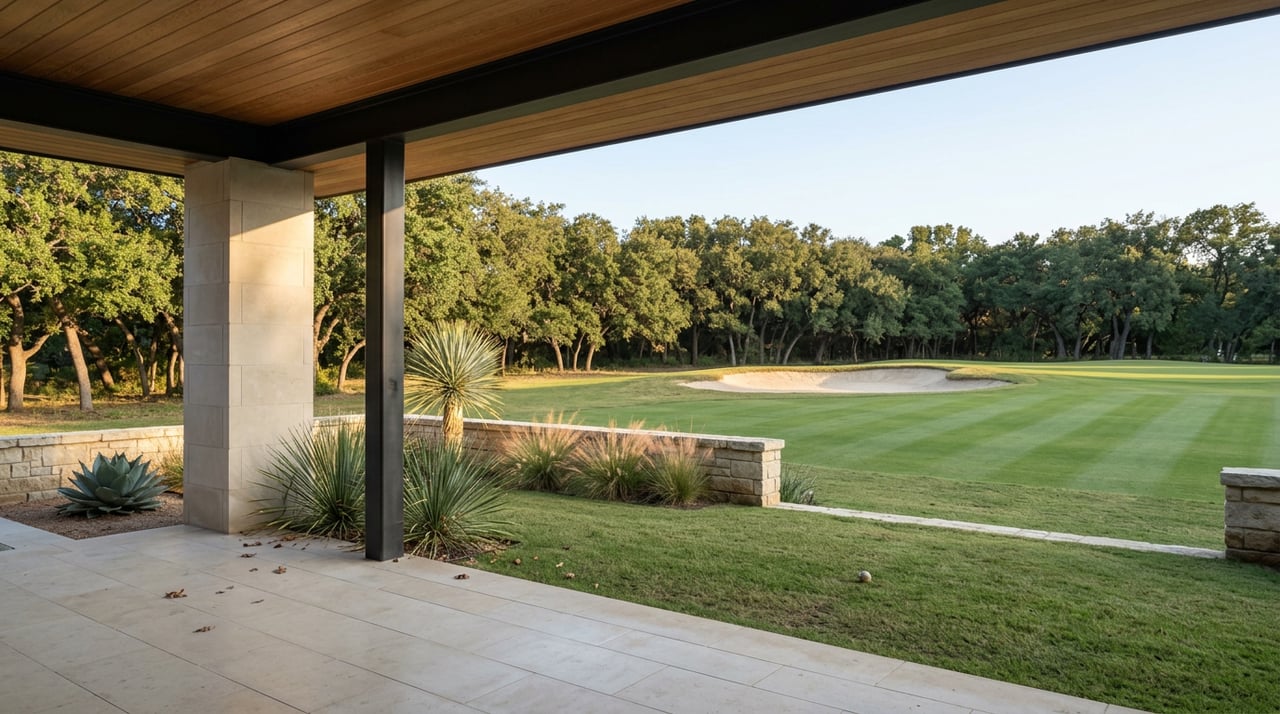
Here is where the comparison gets more expensive, not less. Fazio Canyons, one of four golf courses inside the Barton Creek Country Club system, sits within Amarra's own gates. Golf access feels built into the neighborhood rather than a separate errand, and that proximity is one of Amarra's real selling points. It is also easy to mistake for something it is not: club membership is not included with the home.
Current verified figures put Barton Creek Country Club membership at a $125,000 initiation fee plus $1,120 in monthly dues, a cost structure that sits entirely apart from whatever HOA line already applies to the address. Layer in food minimums and the incidental costs every private club carries, and local brokerage estimates put total carrying costs beyond the mortgage, across HOA and club combined, in the range of $40,000 to $60,000 a year for Barton Creek's higher-priced enclaves.
There is one more detail specific to Amarra worth knowing before you assume the club and the neighborhood function as one package. Barton Creek Country Club only permits personal golf carts for members who own property in a short list of approved communities, and Amarra is on that list. It is a small perk, but it is also proof that the club treats each enclave as its own case, not as an automatic extension of the address. Membership itself works the same way: it is not bundled with the resale, and a buyer who assumes otherwise finds out during the closing process, not before.
The Homesite Math Nobody Runs
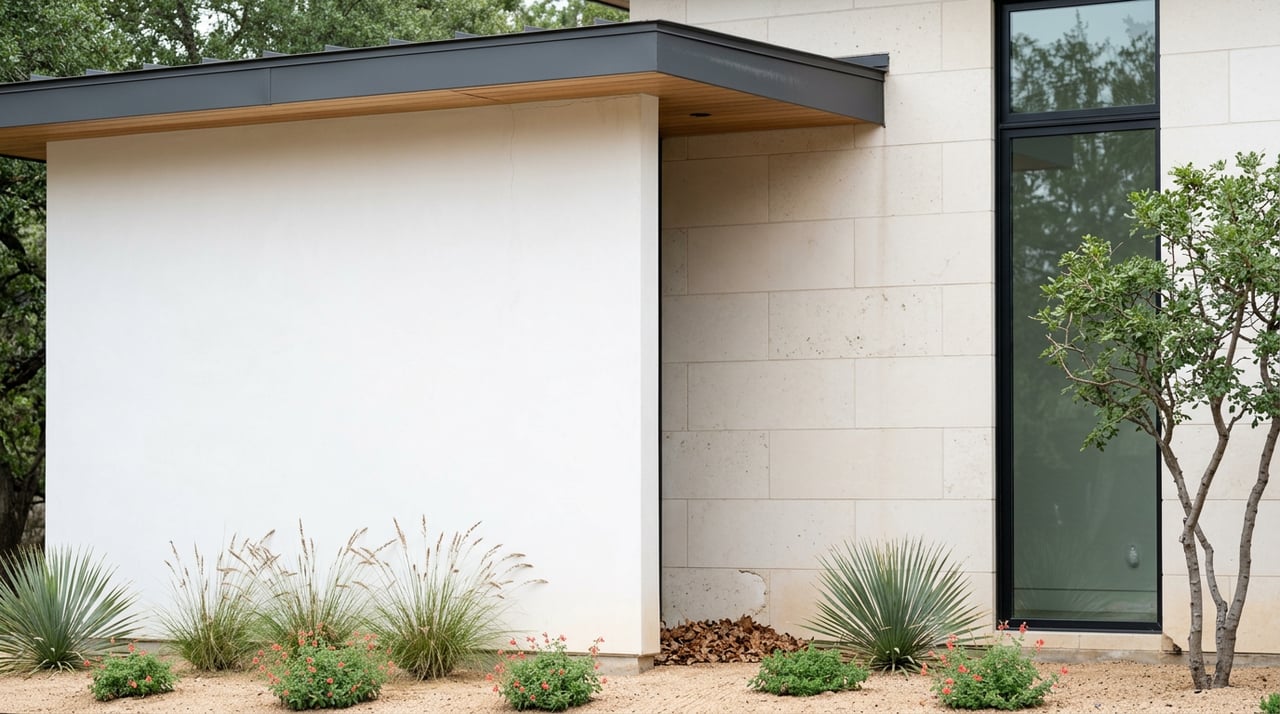
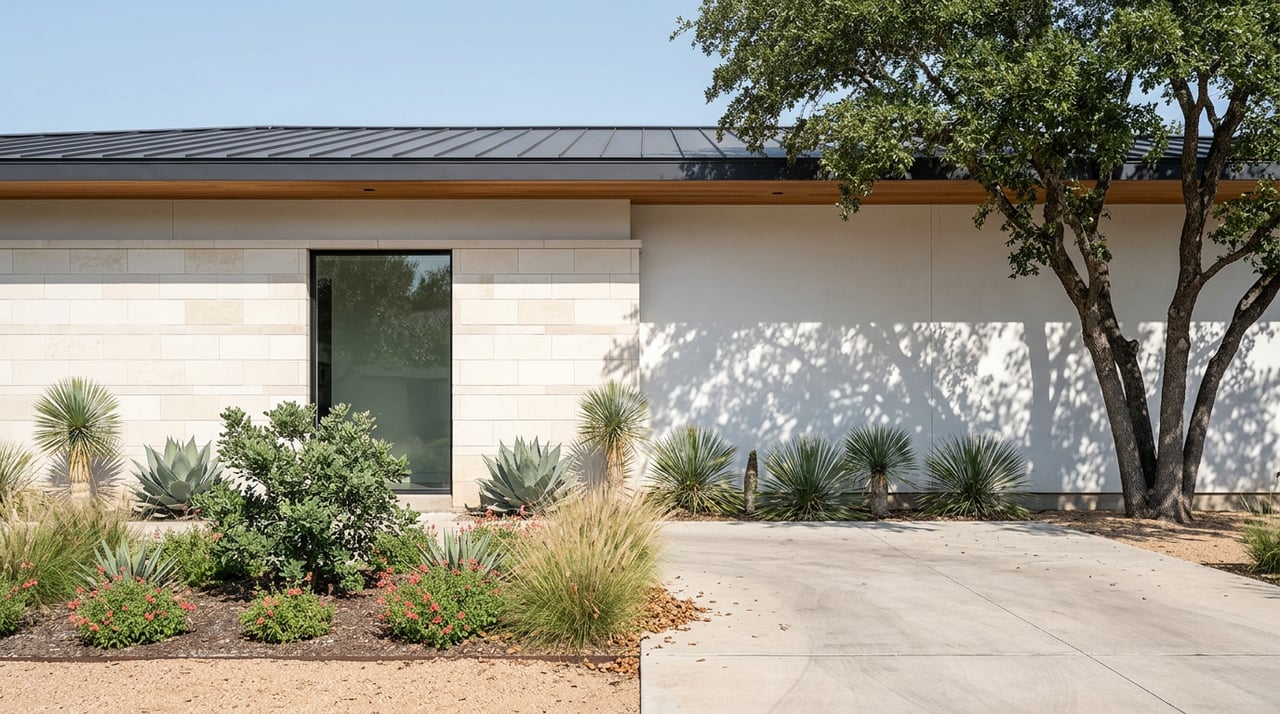
The third number missing from most Amarra conversations is inventory, and it changes the entire negotiating position. Every homesite in Amarra has been claimed. What is actually for sale today is a short list of spec residences built by Heyl Homes, the builder most responsible for the enclave's architectural character, on the last remaining strong parcels. Some of those sites carry panoramic views across Barton Creek; others sit deeper in the acreage with a quieter, more private feel. Either way, a buyer is no longer choosing a lot and building from scratch. They are choosing among what a single builder has already decided to build, on the land that was left.
That is a different kind of decision than shopping an older Barton Creek section where resale turnover is the norm. In Amarra, the primary path to ownership right now runs through new construction from one builder, and the remaining lot sizes reflect that scarcity: parcels range from about 0.79 to 2.38 acres, with a smaller six-home pocket closer to 0.41 acre. A buyer who wants more land, or a different builder's hand on the finishes, is looking at a resale market that is thinner by definition, because so few Amarra owners are selling a neighborhood that only recently finished building itself out.
What This Means for the Resale Math
Days on market data reinforces how much this scarcity cuts both ways. Barton Creek-wide figures from April 2026 put typical time on market between 68 and 189 days, a wide spread that reflects how differently each enclave trades. At the $2 million-plus tier where Amarra sits, brokerage reporting suggests well-positioned homes are moving in 60 to 90 days, while niche properties, the ones with an unusual lot shape or a design choice that narrows the buyer pool, can sit for six months or longer.
For a buyer, that spread is the actual risk to price in. A finished Amarra home on a strong parcel, priced correctly, should move at a pace comparable to the rest of the luxury Barton Creek market. A spec home on a less central lot, or one that leans hard into a specific design point of view, is competing for a smaller pool of buyers who want exactly that. Knowing which category a specific property falls into matters more than knowing the neighborhood's average.
Amarra's identity is already set. The architecture, the setback from the road, the relationship to Fazio Canyons: none of that is still being decided. That can be an advantage for a buyer who wants certainty about what the neighborhood will look like in ten years. It can also mean paying a premium for finality rather than for square footage.
What to Ask Before You Fall for the View
A few questions change how an Amarra offer gets structured, and none of them show up on a standard listing sheet:
- What does the current HOA budget and reserve study actually cover, and is a special assessment being discussed for gates, roads, or shared grounds upkeep?
- Is club membership transferable with this specific property, or does a buyer need to apply and go through the club's own approval process from scratch?
- Is the address on Barton Creek Country Club's approved list for personal golf carts, or is that a separate conversation with the Director of Golf?
- Which property owners association, or associations, actually govern this address, since Barton Creek's structure can mean paying into both a master association and a neighborhood-level one?
- For new construction, what is the builder's current timeline on the remaining Amarra sites, and how many of those final lots are still uncommitted?
Every one of these questions is answerable before a contract is signed. Few buyers ask them until after.
Frequently Asked Questions
Is Barton Creek Country Club membership included when you buy a home in Amarra? No. HOA dues cover the neighborhood's shared grounds, gates, and architectural standards. Club membership, including golf access to Fazio Canyons, is a separate application and a separate cost, currently a $125,000 initiation fee plus $1,120 in monthly dues.
Are there still buildable lots available in Amarra? All of the original homesites in Amarra have been spoken for. The remaining opportunities are spec homes built by Heyl Homes on the last strong parcels, not a pipeline of new lots.
Why are Amarra's HOA dues so much higher than other Barton Creek sections? Amarra is the newest of Barton Creek's contemporary custom enclaves, with stricter design standards and more shared grounds and gate infrastructure to maintain, which shows up directly in a dues range of $517 to $917 a month versus $51 to $82 in the oldest sections.
If you are weighing an Amarra lot or one of its remaining spec homes against a custom build somewhere else in the Hill Country or on Lake Travis, the numbers above are exactly the kind of detail worth running before you fall in love with a view. Seven Custom Homes manages that comparison from lot evaluation through final walkthrough, with senior oversight on every project and the same accountability whether you are building in a settled enclave like Amarra or breaking ground somewhere with more room to design from scratch. Contact our sales team to start your custom home consultation.