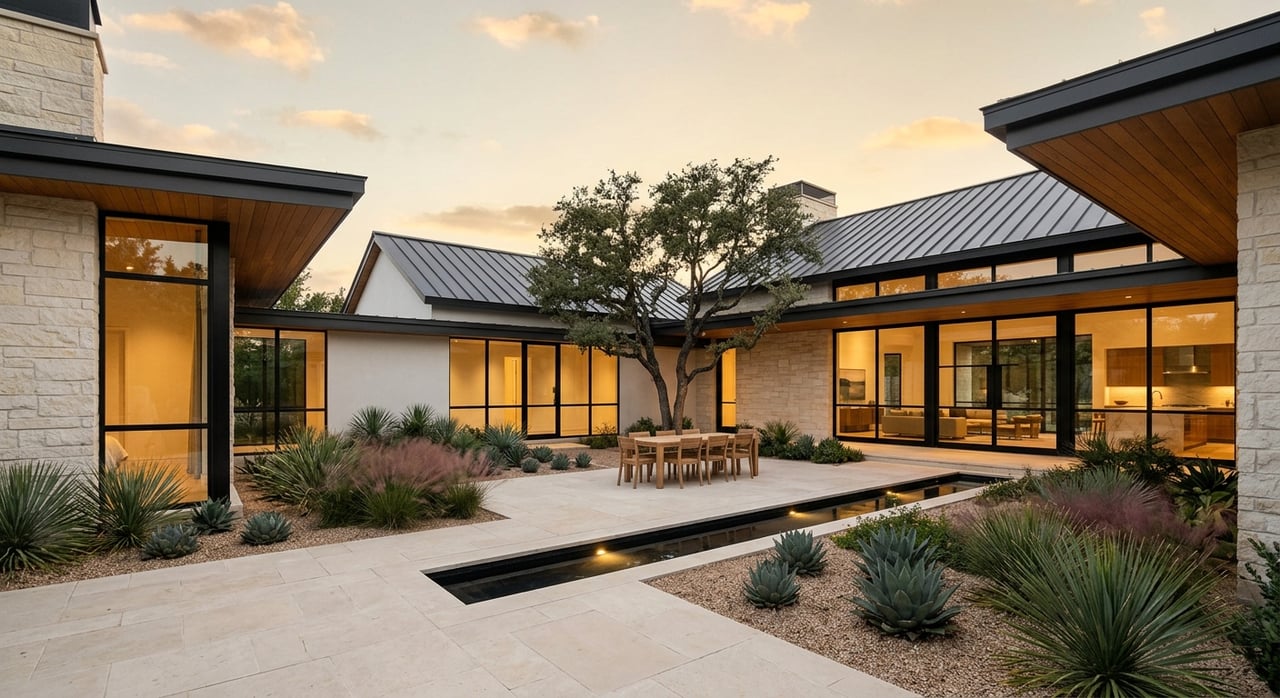
If you are building at The Reserve, you are not just designing a house. You are shaping how weekends, holidays, and everyday lake living will actually feel on the lot. In a waterfront community with a marina, private club and swim park, equestrian amenities, and more than three miles of shoreline, the right plan needs to do more than look impressive. It needs to support boating days, effortless entertaining, guest overflow, and a strong connection to the water. Let’s dive in.
Start With the Reserve Lifestyle
The Reserve at Lake Travis is publicly described as a 310-acre waterfront community in Spicewood with resort-style amenities, including a full-service marina that can accommodate boats up to 80 feet. That setting shapes what many owners want from a home from day one.
In practical terms, your home often works best as a private basecamp for lake life. That means clear view corridors, easy movement between indoor and outdoor spaces, and support areas that can handle towels, gear, coolers, and frequent guests without pushing the main living spaces into chaos.
Prioritize the Lake View
On a lakefront lot, the water should stay the star. The home, pool, and terrace should frame that view rather than compete with it.
A strong plan usually organizes the great room, kitchen, and primary outdoor living area along the main sightline to the lake. When you walk through the front door, move through the main living area, or step onto the terrace, the visual anchor should remain the shoreline and open water.
Keep the Pool Secondary
A pool is still an important social feature, but it should support the lakefront experience, not replace it. Best practice is to connect the pool directly to the terrace and great room while keeping the lake as the primary focal point.
This approach gives you more flexibility for entertaining. Some guests may gather by the water-facing lounge, others may move between the outdoor kitchen and pool, and the home still reads as a true lakefront retreat.
Design Indoor-Outdoor Living as One Space
Current design research continues to show strong demand for natural light and indoor-outdoor connection. Covered outdoor rooms, patios, and decks remain highly valued, and expansive windows and large sliding glass openings help make the transition feel seamless.
At The Reserve, that matters even more because outdoor time is not an extra. It is a core part of how you live on the property.
Create a Tight Great Room-Kitchen-Terrace Sequence
One of the smartest moves in a lakefront floor plan is to keep the great room, kitchen, and main terrace closely linked. This allows serving, gathering, and everyday living to flow naturally without long walks or awkward transitions.
If you host often, this layout also helps the house perform under pressure. Food moves out easily, guests spread out comfortably, and the person preparing drinks or plating dinner still stays connected to the conversation and the view.
Treat the Outdoor Room Like a Real Room
Outdoor living works best when it is designed like furnished interior space, not leftover patio square footage. Recent outdoor-living research found that many homeowners are including dedicated lounge seating, lighting, and side tables in renovated outdoor spaces.
For a Reserve home, that supports a more intentional layout with zones for:
- dining
- lounging
- cooking
- evening conversation
- poolside relaxation
Lighting matters here too. Well-placed outdoor lighting can extend usability after sunset and make the terrace feel welcoming rather than purely functional.
Plan for Guests From the Beginning
A lakefront home in a resort-style community often attracts regular visitors. Family weekends, summer holidays, and long lake days tend to create different space needs than a typical primary residence.
That is why guest readiness should be built into the architecture, not patched in later with air mattresses and overflow furniture.
Include a Main-Level Guest Suite
The AIA Home Design Trends Survey has continued to show demand for main-level guest accommodations and multigenerational features. In a Reserve home, a main-level guest suite or casita can make the home far more comfortable and usable.
This type of layout gives visitors privacy while keeping them connected to the main social spaces. It also works well for longer stays and for owners who want a home that remains practical over time.
Add Flexible Overflow Space
A dedicated office or media room can do double duty when you need it. A bunk room or overflow suite can also make sense for homes designed around family gatherings and weekend traffic.
The key is flexibility without sacrificing polish. In a luxury home, secondary spaces should still feel intentional, well-scaled, and integrated into the overall plan.
Build a Better Support Core
At a community like The Reserve, the home often needs to absorb the logistics of active outdoor living. Even if you use the community marina rather than keeping all boating functions on your lot, people still come back to the house with wet gear, bags, supplies, and guests in tow.
That is why the support spaces matter more than many buyers expect.
Focus on Arrival and Storage
A well-designed support core may include:
- an oversized garage
- golf cart or trailer clearance where appropriate
- a gear room
- lake-towel storage
- a mudroom or back entry for wet traffic
- practical circulation from garage to kitchen and outdoor areas
These spaces keep the main interior calm and clean. They also make the house easier to manage during busy weekends, which is a major quality-of-life advantage in a large custom residence.
Make the Kitchen Work Harder
Today’s luxury buyers continue to value kitchens that do more than provide a pretty centerpiece. Design trend research points to better kitchen function, including prep kitchens or pantries, along with secondary destinations such as wine storage or a coffee station.
In a lakefront home, that functionality becomes even more useful because the kitchen often supports large gatherings and long days of entertaining.
Add Functional Back-of-House Features
A prep kitchen or large pantry can help you keep the main kitchen presentation-ready while still handling real use. Wine storage, a beverage area, or a coffee station can also reduce traffic through the primary cooking zone.
When paired with a direct connection to the terrace, these features help the home feel smooth and composed, even when the guest list grows.
Use Inclusive Design That Ages Well
NAHB’s recent architectural trends also highlight ongoing buyer interest in universal and inclusive design. Features like zero-step entries, wider doorways and hallways, lever handles, and walk-in showers can improve comfort and usability without changing the luxury feel of the home.
For many owners, these are not compromise features. They are long-term planning features that make a legacy property more welcoming and more adaptable over time.
Smart Inclusive Features for Lakefront Homes
Consider integrating:
- zero-step main entries where site conditions allow
- wider circulation paths
- main-level primary living
- walk-in showers
- easy indoor-outdoor thresholds
These choices can make day-to-day living easier while supporting the long-term value and flexibility of the home.
Verify Site Constraints Early
At The Reserve, design decisions should never happen in isolation from the site plan. Travis County Development Services oversees key issues in unincorporated areas and ETJs, including floodplain management, construction inspections, and subdivision regulation.
For septic review, the county’s OSSF permit process requires a site plan that shows buildings, pools, driveways, patios, decks, lakes, slopes, floodplain, and septic components. That makes early coordination between architecture, civil engineering, and septic design especially important.
Watch Impervious Cover and Land Disturbance
LCRA’s Highland Lakes Watershed Ordinance can also affect Lake Travis-area projects in Travis County. According to LCRA, the ordinance may require stormwater best management practices, buffer zones, erosion controls, and permits when impervious cover exceeds 10,000 square feet or land disturbance exceeds 1 acre.
For a large custom home with a pool terrace, outdoor kitchen, driveway, and retaining walls, this is a core planning issue. It can influence layout, grading, hardscape strategy, and the overall development approach.
Check Floodplain Conditions Before Finalizing Design
For lot-specific flood hazard information, FEMA’s Flood Map Service Center is the official public source, and floodplain status should also be confirmed with the county before foundation elevations or lower-level layouts are locked in.
On waterfront property, utility placement deserves attention as well. FEMA recommends elevating vulnerable equipment above flood elevation, especially items such as water heaters, electrical equipment, and pool-service systems.
Think Through Dock and Boat Strategy
Because The Reserve includes a full-service marina, some owners may choose to rely on that amenity rather than duplicating marina-like functions at the residence. In many cases, that shifts the home’s role toward staging, storage, arrival, and entertaining.
That can be a smart move because it allows the lot and home to stay focused on views, comfort, and circulation.
If You Want a Private Dock
If you are considering a private dock, LCRA rules are important early in the process. LCRA states that residential docks on Lake Travis must meet standards for flotation, lighting, access, anchoring, and distance from shore.
LCRA also states that residential docks of 1,500 square feet or less do not require an LCRA permit, registration, or fees, and that on Lake Travis a dock may extend up to 100 feet from the shoreline, subject to the 40-foot lake-access rule. Floating habitable structures are prohibited on the Highland Lakes.
Why Design-Build Matters on a Reserve Lot
A lakefront home at The Reserve is rarely just about floor plan selection. It is a coordinated exercise in lot evaluation, view management, permitting, outdoor living, support spaces, and technical planning.
That is where an integrated design-build approach can create real value. When lot evaluation, architectural coordination, permitting, selections, and construction oversight are managed as one connected process, you can make clearer decisions earlier and reduce friction across the entire project.
For a large-scale custom home in a setting like this, the goal is simple. You want a home that captures the lake, supports the lifestyle, and is planned with enough rigor to avoid costly surprises later.
If you are exploring a custom lakefront home at The Reserve, David Lyne can help you evaluate your lot, shape the right design priorities, and guide the build with senior-led oversight from concept through completion.
FAQs
What design features matter most in a home at The Reserve at Lake Travis?
- The most important priorities are usually a strong indoor-outdoor connection, clear lake views, a main-level guest-ready layout, generous outdoor seating and lighting, a functional kitchen-to-terrace relationship, and storage that supports boating and wet-foot traffic.
What local approvals can affect a custom home at The Reserve in Travis County?
- Key approvals and reviews may include Travis County development requirements, septic or OSSF review, floodplain status confirmation, LCRA watershed and stormwater controls, and any dock-related compliance questions.
Should a pool or the lake view be the focal point on a Reserve lot?
- In most cases, the lake view should remain the primary visual anchor, while the pool works as a connected social feature tied to the terrace, kitchen, and great room.
Does marina access at The Reserve change how you design the house?
- It often does. Because the community includes a full-service marina, many owners may choose to focus the home on arrival, entertaining, storage, and easy lake-day circulation rather than trying to recreate marina functions on the lot.
What should buyers know about private docks on Lake Travis?
- LCRA states that residential docks on Lake Travis must meet safety and placement standards, and residential docks of 1,500 square feet or less do not require an LCRA permit, registration, or fees. Buyers should verify dock plans early against current LCRA rules.
Why is early site planning so important for a lakefront home in The Reserve?
- Early site planning matters because the house, pool, driveway, septic design, grading, floodplain conditions, and watershed requirements all influence one another, especially on a waterfront lot in unincorporated Travis County.