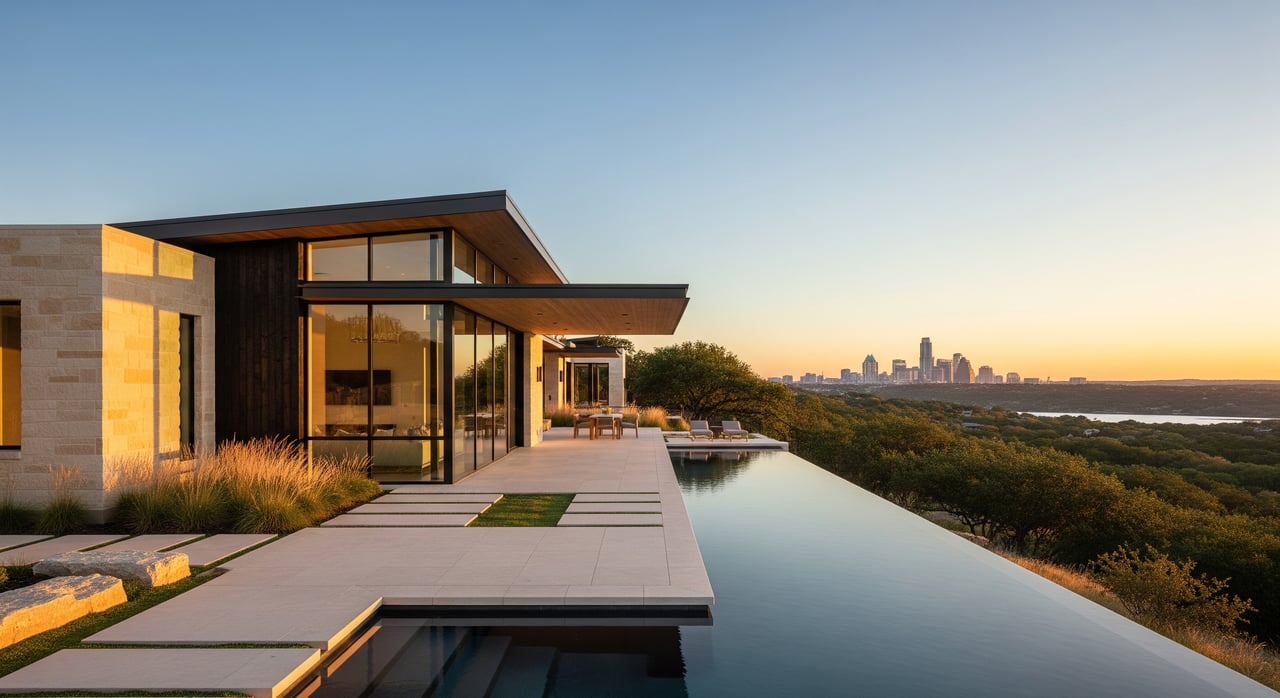
What if your next home in West Lake Hills felt like a private resort that still worked beautifully every day? You want a design that respects the Hill Country setting, keeps energy costs in check, and stands the test of time. In this guide, you’ll learn what luxury buyers expect right now in West Lake Hills, which materials and systems perform best, and how to approach a complex site with confidence. Let’s dive in.
West Lake Hills at a glance
West Lake Hills sits just west of central Austin, where hills, ravines, and mature oaks shape every view. Lots are often irregular, and tree cover influences how you place the home and capture sunsets. Buyers in this micro market value privacy, long view corridors, and low‑density feel. They also expect high design, quality finishes, and integrated outdoor living.
The climate brings hot summers, mild winters, and occasional heavy storms. That means you need smart solar control, durable exterior assemblies, and site strategies that manage drainage and erosion on slopes. If you plan with these realities early, you get comfort and performance without sacrificing architecture.
Architectural styles buyers expect
Luxury homes here lean modern in spirit, with warm, regionally grounded details. You’ll see three dominant directions:
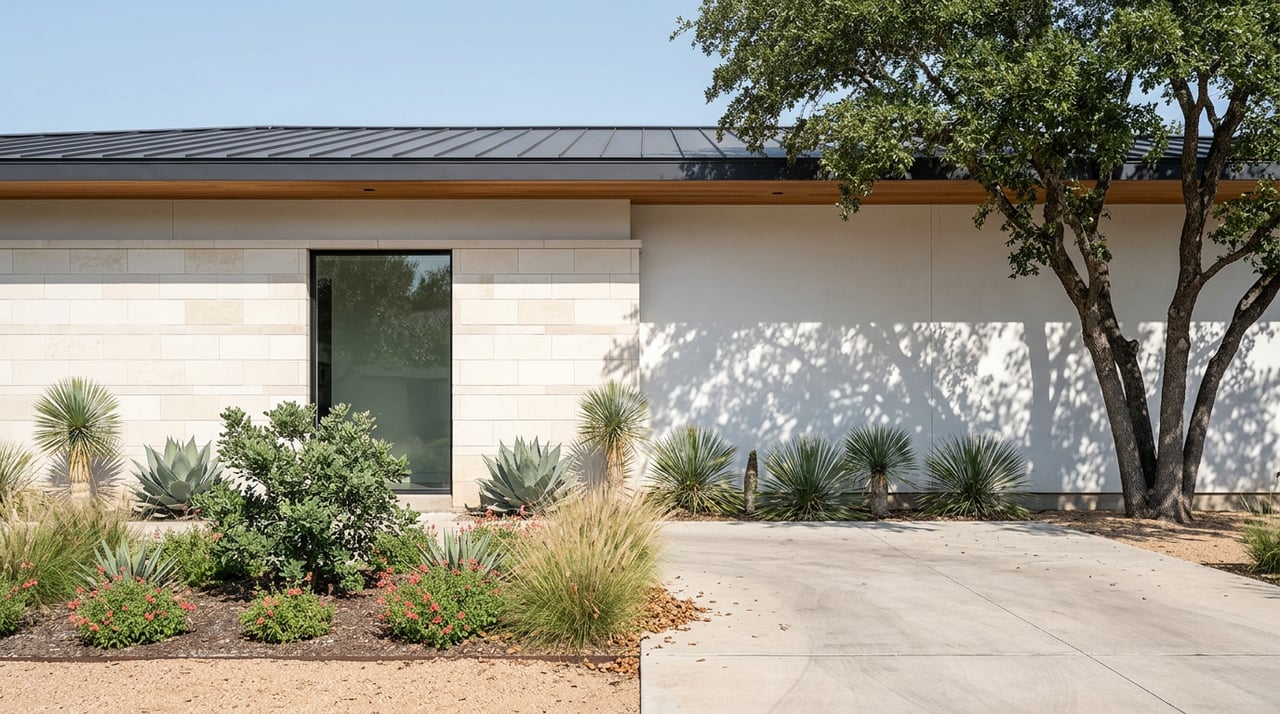
- Hill Country Contemporary. Clean forms paired with native limestone, cedar, and stucco. Deep overhangs and large openings are common.
- Modern and Minimalist. Simple planes, exposed steel, and expansive glass with restrained palettes.
- Mid‑century references. Open plans, big windows, and natural textures with less ornate trim.
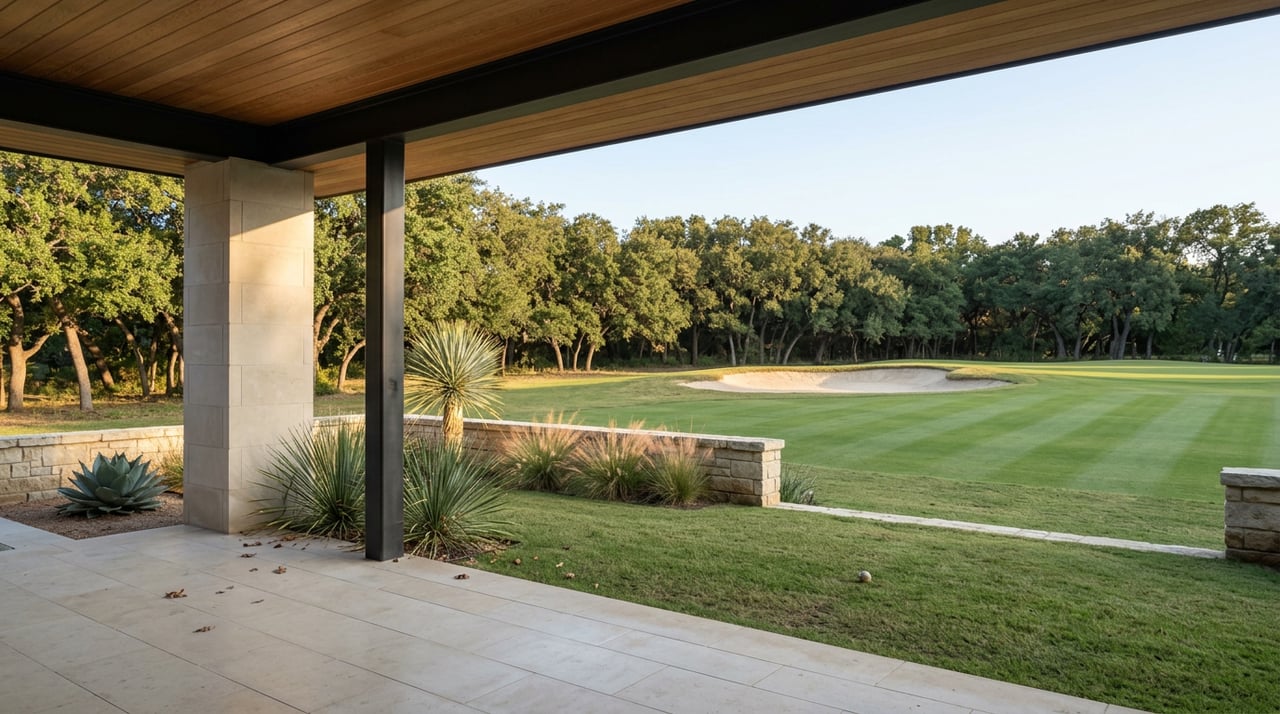
Across all styles, owners prioritize view capture, privacy, and a seamless flow to the outdoors. Massing is often shaped to take in the ridgeline while minimizing street impact.
Materials that perform and look timeless
Exterior materials in West Lake Hills work hard and age well when specified correctly.
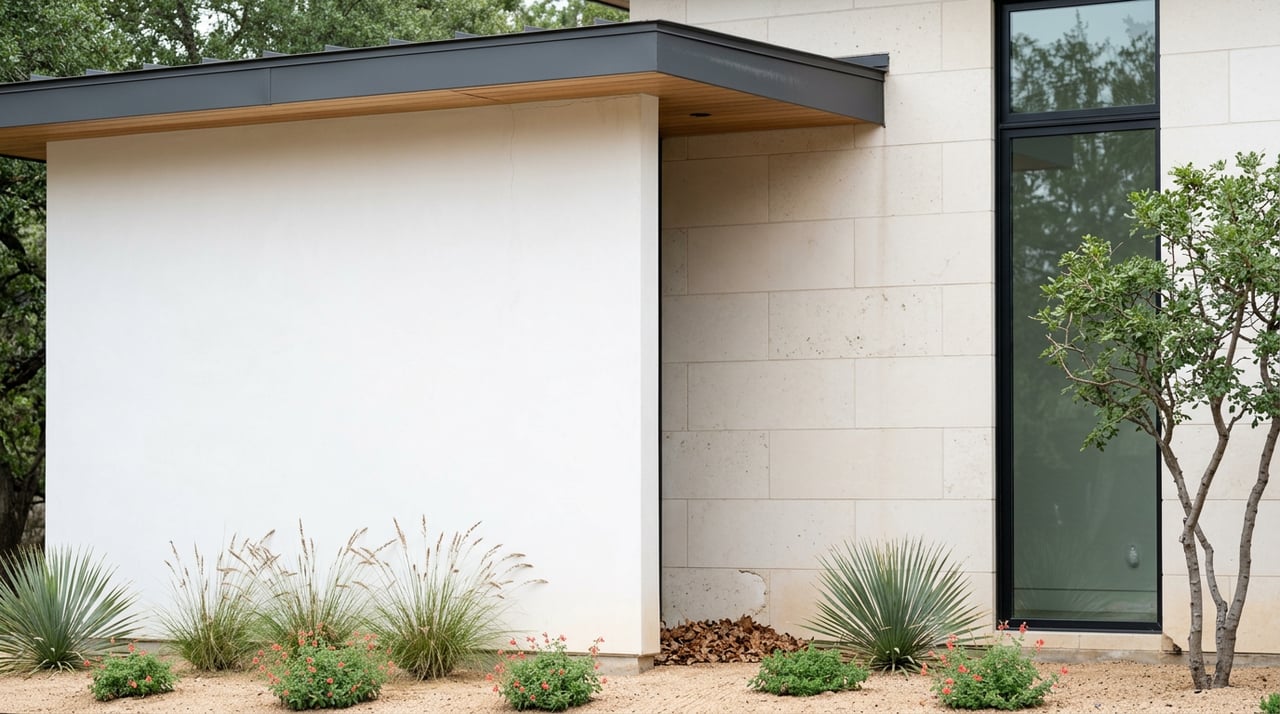
- Native limestone. Used for plinths, feature walls, and site walls, it connects the house to the Hill Country vernacular and reads as authentic.
- Wood accents. Cedar and reclaimed timbers add warmth. For longevity, choose thermally modified or specially treated species outside.
- Standing seam metal roofs. Valued for longevity and a crisp profile, often paired with low‑slope membranes on modern forms.
- Stucco and fiber‑cement panels. Deliver clean lines with low maintenance.
- High‑performance glazing. Large glass walls and sliding systems are common, but you need low‑e coatings and thermally broken frames to control heat gain.
- Concrete and large‑format porcelain tile. Durable finishes that carry from interiors to terraces for a seamless look.
Inside, the palette favors neutral, earthy tones with wood and stone textures. Quartz countertops, engineered hardwoods, and porcelain that mimics stone or wood deliver durability and broad resale appeal. Metal accents trend matte and warm, like black, oil‑rubbed bronze, and aged brass.
Indoor‑outdoor living essentials
A luxury home in West Lake Hills lives outside as much as inside. Think in layers so you can use spaces year‑round.
- Covered outdoor living rooms. Include heaters, fans, and protection from sun and storms. Connect them to the main living area with large sliding doors.
- Outdoor kitchens and wet bars. Place them near the indoor kitchen to simplify entertaining.
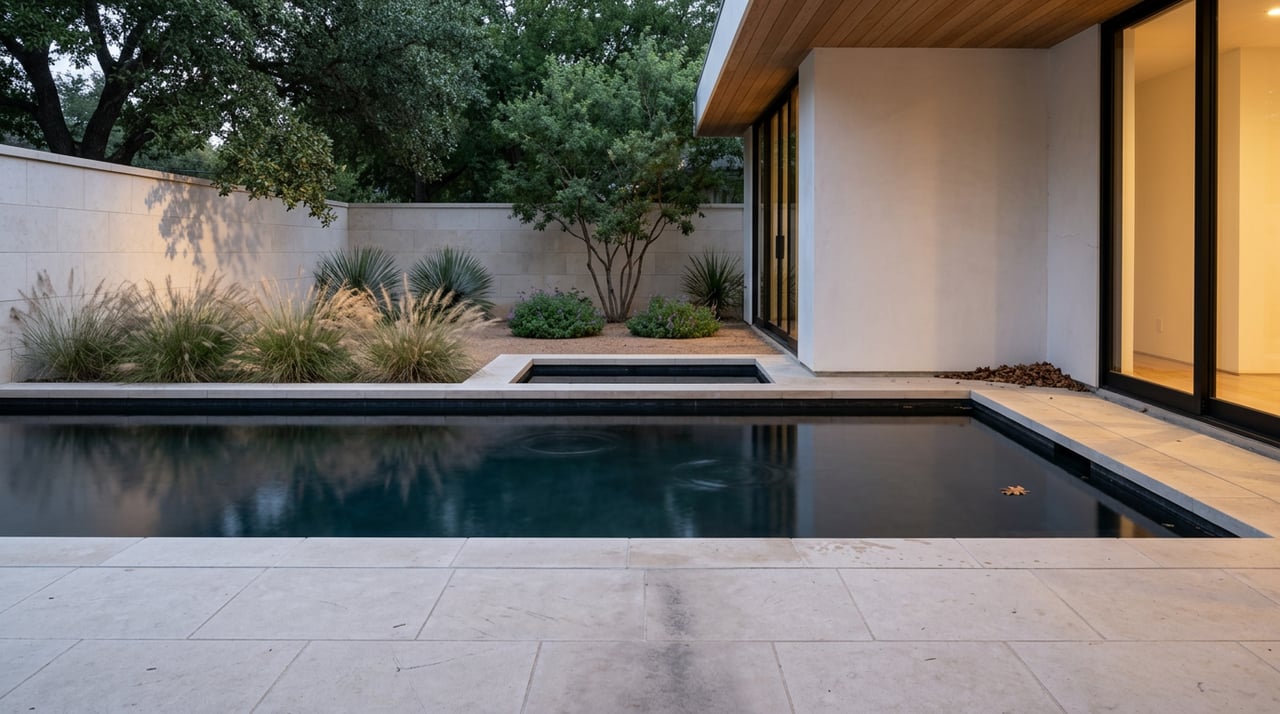
- Resort‑style pools and spas. Orient for privacy and views. Integrate fire features for evening use.
- Multi‑elevation terraces. A shaded lower terrace can be a summer retreat, while a sunnier upper terrace works for winter.
- Guest or in‑law suites with private outdoor access. Popular for flexibility and multi‑generational living.
Landscape choices matter as much as architecture. Preserve mature oaks whenever possible. Use native and climate‑adapted plants to reduce irrigation needs and fit the Hill Country aesthetic. On sloped lots, plan for permeable surfaces, swales, and rain gardens to manage stormwater. Low‑impact lighting keeps paths safe without washing out the night sky.
Comfort, sustainability, and smart systems
Today’s luxury buyer expects comfort that is efficient and healthy. You can hit all three with the right systems.
- Energy efficiency. High‑performance insulation, well‑sealed envelopes, and right‑sized HVAC are standard in this segment. Zoning and advanced compressors or VRF systems help maintain comfort in large volumes.
- Solar readiness. Homeowners in the Austin area often request photovoltaic systems or at least a solar‑ready roof layout. Screen inverters and gear for a clean look.
- Water wise strategies. Drought‑tolerant landscaping with drip irrigation, plus rainwater collection and rain gardens, can lower water use.
- Storm resilience. Invest in robust roof and waterproofing details, sealed crawl spaces or elevated slabs on slopes, and thoughtful drainage.
- Whole‑home automation. Integrate lighting, shading, HVAC, security, and AV for convenience and energy savings. Improved ventilation, filtration, and low‑VOC materials support indoor air quality.
Resale‑minded design choices
You can enjoy a highly personalized home that still protects resale. Focus investment where the market places value.
- High‑ROI features. Quality exterior materials that age well, thoughtfully executed indoor‑outdoor living, a private primary suite with outdoor access, mature landscape and tree preservation, and energy features that lower operating costs.
- Features to right‑size. Very individualized finishes or layouts that reduce usable space can narrow your buyer pool. Overly complex indoor‑outdoor transitions that invite water issues can also create maintenance risk.
- Maintenance matters. Choose details and materials that minimize staining, rot, and repainting to keep long‑term costs down.
Site, code, and build realities
West Lake Hills is its own municipality, so you will coordinate permitting with the city and align with tree and grading requirements. Ridgeline protection and sensitive soils shape massing and foundation strategies. Engage an arborist early if you have significant oaks and plan protection from day one.
Steep grades often call for piers or stepped foundations and careful erosion control. If you plan an expansive glazing package, bring in mechanical and glazing subcontractors with high‑performance detailing experience. Expect longer lead times for specialty glass, custom steel, and imported stone. Many owners now plan for EV charging capability in the garage during design.
Detailing glass and sun control
You want the view walls, but not the heat. Balance glass and comfort with a layered approach that fits the local climate.
- Deep overhangs sized to summer sun angles.
- Low‑e glazing with thermally broken frames.
- Exterior shades or operable screens that manage solar load without blocking views.
- Strategic orientation and operable panels for cross‑ventilation when weather allows.
This mix preserves the architecture, protects interiors, and keeps HVAC demand in check.
A practical path to your custom home
If you are building in West Lake Hills, start with a clear plan for your lot, architecture, and delivery.
- Lot evaluation. Study topography, trees, and view corridors before you lock in a design. Protect the best sightlines early.
- Design coordination. Align architecture, structural systems, and landscape from the start. This prevents costly rework.
- Envelope and water management. Detail sills, flashings, waterproofing, and drainage for heavy storms. Do not treat these as afterthoughts.
- Selections with longevity. Choose materials that suit the Hill Country and age gracefully. Think stone, metal, quality woods, and durable interior surfaces.
- Build governance. Complex estates benefit from tight schedule and cost controls, clear updates, and senior oversight.
At Seven Custom Homes, you get a single accountable partner from lot study to final walkthrough. A senior‑led team coordinates architecture, permitting, selections, and construction with weekly leadership oversight and real‑time project dashboards. The result is a home that honors design intent, navigates the terrain, and delivers with fewer surprises.
Ready to shape a West Lake Hills home that lives beautifully today and resells smart tomorrow? Start a private consultation with David Lyne to discuss your site, goals, and timeline.
FAQs
What styles define luxury homes in West Lake Hills?
- Hill Country Contemporary, Modern and Minimalist, and Mid‑century inspired designs are most common, each emphasizing views, privacy, and indoor‑outdoor flow.
Which exterior materials hold value over time?
- Native limestone, standing seam metal roofing, high‑performance glazing, and well‑detailed stucco or fiber‑cement siding are favored for durability and timeless appeal.
How do you manage heat with large glass walls?
- Combine deep overhangs, low‑e glazing with thermally broken frames, exterior shading, and smart orientation to capture views while controlling solar gain.
What outdoor features do buyers expect most?
- Covered outdoor living rooms, outdoor kitchens, resort‑style pools, and multi‑level terraces that serve different seasons and times of day.
Which sustainability features matter to local buyers?
- Solar readiness or PV systems, efficient HVAC with zoning, drought‑tolerant landscaping with drip, and strong envelope detailing for comfort and lower operating costs.
What are common site and permitting considerations?
- Tree preservation, ridgeline sensitivity, drainage and erosion control on slopes, and coordination with the City of West Lake Hills for permits and inspections.