Thinking about buying a lot in The Reserve at Lake Travis? You are not alone. The south shore of Lake Travis draws buyers who want a true resort lifestyle with deep-water boating, private-club amenities, and striking Hill Country views. The key is knowing how lot type, dock rights, slope, utilities, and HOA rules affect what you can build and how you will live.
This guide gives you a clear path. You will learn how to spot the right lot category, verify marina and dock access, evaluate buildability, and set smart offer contingencies. As a luxury design-build team that regularly works on Lake Travis estates, we will also share how we help clients remove risk before they write an offer. Let’s dive in.
The Reserve at a glance
The Reserve at Lake Travis is a gated, resort-style community on the south shore of Lake Travis in the Spicewood area. The development spans several hundred acres and includes roughly 3 to 3.5 miles of shoreline, with historic plats referencing a 670-foot contour that helped define lakebed boundaries during planning. You should keep that survey history in mind when you evaluate any waterfront lot’s dock potential. Project and survey details are your best starting point.
Amenities are a major draw. Public materials describe a large, deep-water marina with about 160 to 162 covered slips, plus a resort-style swim park with a lazy river and the Cypress Club. Expect club initiation and recurring dues tied to certain amenities. Review the developer press materials on the marina and amenities as you plan your ownership costs.
From a market perspective, waterfront and deep-water access properties tend to command the highest prices and the most consistent demand on Lake Travis. That premium can support long-term resale value, but it also raises the stakes for due diligence. A quick read on the Lake Travis luxury waterfront premium will help you think about price and exit strategy.
Choose the right lot type
Not all lots live the same. Here is how local buyers commonly describe lots inside The Reserve and nearby areas, and what each means for design and lifestyle.
Waterfront lots
These lots physically touch Lake Travis on the main body or in a cove. They deliver the highest lifestyle value and the strongest resale appeal. Do not assume a private dock is allowed. In this area, waterfront status alone does not guarantee dock rights. Title boundaries, the original plat, and the Lower Colorado River Authority’s rules work together to determine what you can build over the water. Start with the survey history and lakebed context and plan to verify with LCRA.
Water-view or bluff lots
These sites sit above the shoreline and frame lake views without direct frontage. They can be easier to build and maintain than steep waterfront bluffs, and they often avoid the regulatory steps tied to docks. View orientation, wind exposure, and privacy become the main design drivers.
Interior or wooded estate lots
These parcels trade water proximity for privacy and value. You will focus more on trees, driveway length, and utility connections. If a lot requires on-site septic instead of community sewer, that will shape your building envelope and pool placement.
Dock rights and marina access
Boat access is a transaction-critical topic at The Reserve. Treat it as a separate workstream during due diligence.
LCRA and lakebed boundaries
Survey records for The Reserve reference a 670-foot contour used to define boundaries during platting, and historic purchases from LCRA focused on areas above that line. Submerged lands are typically state controlled or licensed, which can limit private dock rights. Texas courts have upheld district or regulatory denials where recorded title does not create littoral rights. Review the project survey context and the case background on littoral rights and dock licensing to understand why you cannot assume a dock by default.
What the marina offers
Public materials describe a large, deep-water marina with covered slips and full dock services. Published counts vary slightly, from about 160 to 162 slips, and policies can differ on ownership vs. lease, transferability, boat size, and waitlists. Read the marina and amenity summary and request the current marina policy in writing.
Your action plan on boat access
- Ask the seller, HOA, and marina operator for the written marina policy, fee schedule, and current slip availability.
- Confirm with LCRA whether the lakebed adjacent to your lot is state or LCRA managed and what license or permit would be required for any private dock.
- Review the recorded plat and your preliminary title report for lakebed conveyances, easements, or restrictions that affect docking.
Slope, orientation, and buildability
Even within the same community, lots can vary widely in slope and site complexity. That matters for cost, timeline, and design.
Slope and foundation
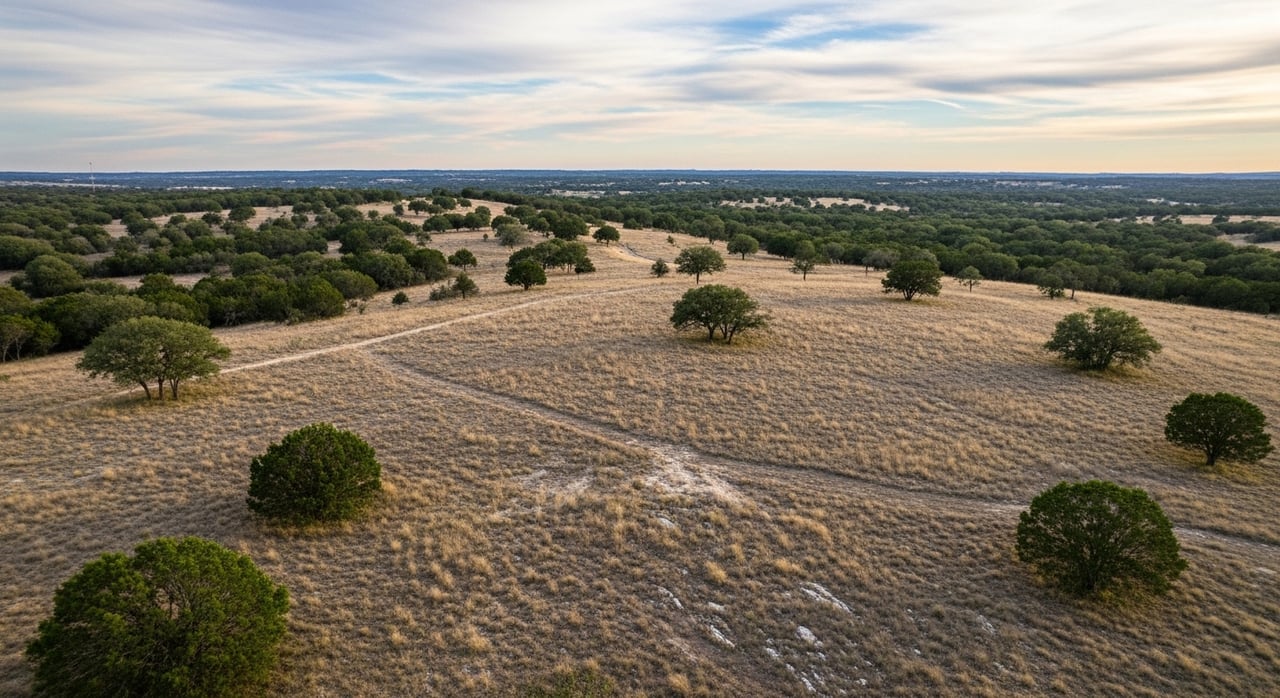
Reserve-area lots range from near-lake benches to steep bluffs. Flatter sites are simpler and less costly to build. Steeper or rocky lots often need engineered foundations, retaining walls, longer driveways, and more robust erosion control. Order a geotechnical report early to learn whether you need slab on grade, drilled piers, or another foundation system typical of Hill Country limestone.
Sun, wind, and privacy
Confirm how your main view and outdoor living areas will face. In the Austin climate, afternoon sun and prevailing winds shape pool placement, shade strategies, and glazing choices. Walk the lot at different times of day, and compare notes with a topographic map.
Pre-offer site checks
- Commission an updated boundary survey, ideally ALTA, plus a current topo showing setbacks and elevations. Start with the survey background for this development.
- Order a geotechnical report for foundation guidance and septic suitability if sewer is not available.
- Ask a civil engineer or builder for a preliminary grading and drainage concept, including driveway slopes, cut and fill, and retaining needs.
- Verify tree preservation rules and any view corridor or utility easements that reduce your buildable area.
Utilities and infrastructure
Utility conditions vary by parcel. Some Reserve listings show community water and underground utilities. Others note private or shared septic systems. Floodplain notations also differ by lot. Before you make an offer, confirm:
- Water source and meter location.
- Sewer vs. septic status, plus any septic permits and setback requirements.
- Electric, gas, and communications providers, including any line extension fees.
- Whether the lot touches mapped flood zones and whether an elevation certificate exists. Insurers will use those details to set premiums.
HOA, ACC, and fees
The Reserve operates with recorded deed restrictions, HOA oversight, and an Architectural Control process. Many amenities are tied to Cypress Club membership with initiation and monthly dues. Ask for the complete package before you write an offer:
- Recorded plats, CCRs, amendments, and Architectural Guidelines.
- ACC submission checklists, review timelines, and any approved-builder rules.
- The full fee schedule for HOA assessments, club dues, marina charges, and transfer or special assessments.
Design rules can include minimum home size, materials, roof types, color palettes, and outdoor living standards. These choices directly affect cost and schedule, so align your vision with the guidelines before you commit.
Offer strategy and resale
Your lot decision shapes both your build and your long-term value.
- Price drivers. Waterfront lots usually command the strongest pricing and buyer demand on Lake Travis, reflecting lifestyle and scarcity. See the market context for the waterfront premium as you frame offer terms.
- Smart contingencies. Build in time to confirm dock rights or marina access, order surveys and geotech, verify utilities, and pre-align your concept with the ACC. When in doubt, condition your offer on these milestones and specify remedies if findings change scope or cost.
- Balance. Water-view and bluff lots often deliver stunning views with fewer regulatory steps, while interior lots can be the best value if privacy and design freedom rank higher than direct water access.
Due diligence checklist
Use this sequence to avoid surprises and keep your offer competitive.
Request the full HOA and ACC packet: recorded plat and CCRs, Architectural Guidelines, ACC checklist, budget, financials, marina policy, and current fee schedule.
Ask your title company for recorded documents that impact water access: easements, lakebed conveyances or reservations, and any recorded marina or dock easements. If the deed or plat references the 670-foot contour as the limit, treat dock rights as unresolved until LCRA confirms. See the survey context.
Commission an updated ALTA boundary survey and a topographic survey showing setbacks, critical elevations, and existing improvements.
Order a geotechnical report and request a preliminary grading and drainage plan to identify retaining walls, driveway grades, and likely foundation type.
Check FEMA flood maps and ask for any elevation certificates. Get an insurance quote tied to the lot’s elevation and zone.
Verify utilities: water supply, sewer vs. septic, electric, gas, and communications providers. If septic is required, confirm percolation data and setbacks that affect the building envelope.
Contact LCRA about dock permits and shoreline rules, and get the marina operator’s policy on slip availability, transfer rules, sizes, and waitlists. Start with the project overview and then call LCRA directly.
Align with the ACC. Ask for review timelines, required submittals, and recent variances near your lot.
Obtain builder estimates for site work plus your target home program. Prior builds in The Reserve and wider Lake Travis area are the best benchmark. Review the neighborhood summary to orient your team.
Model total ownership costs: property taxes, HOA assessments, club dues, possible seawall or dock maintenance, and marina fees.
How a design-build partner reduces risk
You want a lot that supports your vision without hidden costs. As a boutique luxury design-build firm focused on Hill Country and lakefront estates, we help you make confident decisions before you write an offer. Our integrated team handles lot evaluation, architectural coordination, permitting, selections, purchasing, and construction oversight with senior leadership involved weekly.
Here is how we support you on Reserve lots:
- Lot evaluation with builder-level insight. We walk the site, read the plat, flag easements, test driveway concepts, and estimate site work based on topography and soils.
- Early engineering. We coordinate ALTA/topo surveys and geotechnical studies so foundation and retaining strategies are clear upfront.
- ACC strategy. We align your concept with Architectural Guidelines, outline likely review timelines, and anticipate any design challenges.
- Dock and marina coordination. We help you gather LCRA guidance and confirm current marina policy so boat access is defined in writing.
- Predictable delivery. Our proprietary AI-enabled platform highlights schedule and budget risks early and provides real-time updates, so you always know where your project stands.
Ready to explore lots at The Reserve and plan a home worthy of the setting? Reach out for a focused, builder-led consultation. Connect with David Lyne to start your site evaluation and custom home plan.
FAQs
Do waterfront lots in The Reserve guarantee a private dock?
- No. Dock rights depend on recorded title, plat boundaries, and LCRA rules for submerged lands. Verify with title, LCRA, and the marina before you rely on a dock.
Are marina slips automatically included when I buy a lot?
- Not typically. Slip availability, size, ownership or lease rules, and transferability are set by the marina policy. Request the current policy and confirm waitlists.
What site studies should I order before writing an offer on a Reserve lot?
- Commission an ALTA boundary and topo survey, a geotechnical report, and a preliminary grading plan. These define buildability, foundation type, and true site costs.
How do HOA and ACC rules affect my custom home at The Reserve?
- They shape design, size, materials, roof types, and timelines. Ask for the full CCRs and Architectural Guidelines early and align your concept before submitting.
Do all Reserve lots have community sewer service?
- No. Some parcels use private or shared septic. If septic is required, it will influence your building envelope, pool location, and landscape planning.