
If you are planning a Hill Country estate in Wimberley, the land itself will shape almost every major decision you make. A beautiful tract may look ready for a dream home, guest house, pool, and long drive, but local topography, floodplain conditions, groundwater rules, and septic requirements can quickly change what is practical. The good news is that with the right planning sequence, you can make smarter early decisions and avoid costly redesigns later. Let’s dive in.
Why Wimberley lots need careful planning
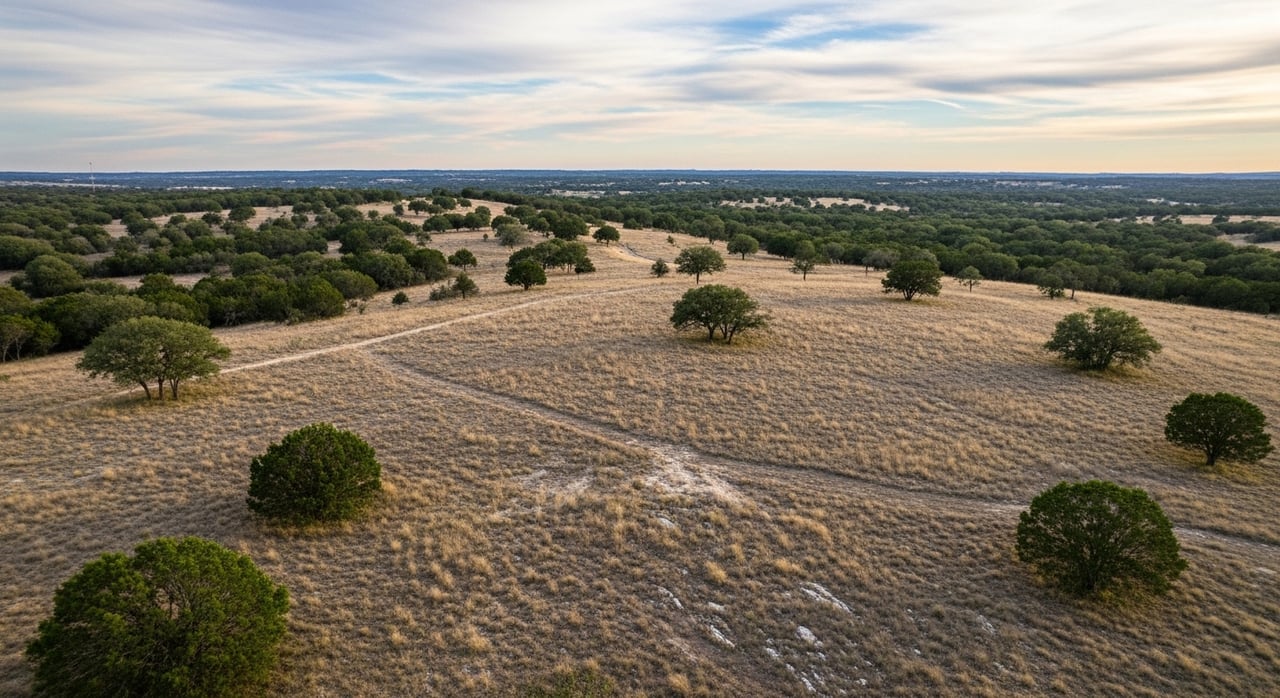
Wimberley sits in the Blanco River Valley, where Cypress Creek meets the Blanco River. According to the City of Wimberley community overview, the area is limestone-heavy, with shallow clay loams on slopes and elevations ranging from about 850 to 1,300 feet above sea level.
That Hill Country setting is a big part of Wimberley’s appeal, but it also means your lot is not just a backdrop for the home. Shallow soils, limestone, changing grades, and stream corridors can influence where you place the house, driveway, septic field, utilities, and outdoor living spaces.
For a large estate, it helps to think of the property as one connected site plan from day one. That is often more effective than treating the house, guest casita, barn, pool, and access points as separate decisions made over time.
Start with the land, not the floor plan
One of the biggest mistakes buyers make is falling in love with a house plan before they fully understand the lot. In Wimberley, the site can drive the design just as much as your room count or architectural style.
In unincorporated Hays County, development rules define development broadly. That can include houses, sheds, pools, outbuildings, grading, fill, roadways, and creek crossings.
That matters because each of those elements can affect permitting and layout. If you are planning a main residence plus detached structures and outdoor amenities, it is wise to evaluate the full estate footprint together before finalizing plans.
What should be planned together
For many Wimberley estate properties, these items should be considered as one package:
- Main house location
- Guest house or casita placement
- Barn or detached garage siting
- Driveway alignment and access
- Pool and terrace layout
- Septic system location and sizing
- Utility routing
- Drainage and grading strategy
- Creek crossings, if any
When these pieces are planned together, you can reduce the risk of conflicts between the home design and the realities of the land.
Floodplain and creek corridors matter early
If your property is near Cypress Creek, the Blanco River, or smaller drainage areas, floodplain review should happen very early. Hays County states that all development, whether it is inside or outside the floodplain, requires a permit, and the county’s floodplain program uses updated flood hazard maps that also affect flood insurance rates and requirements. You can review these requirements through the county’s development services FAQ.
The City of Wimberley also emphasizes the value of riparian vegetation along creeks and rivers. On the city’s Environmental Stewardship page, the city notes that proper riparian vegetation helps slow floodwater, trap sediment, and clean runoff before it reaches streams and rivers.
For you as a buyer, that means the question is not simply, “Can I build a house here?” It is also, “Where can the driveway, septic components, retaining walls, terraces, and outdoor living features go without creating problems near flood-prone or sensitive riparian areas?”
Key floodplain questions to ask
Before you move too far into design, it helps to confirm:
- Whether any part of the lot is in a mapped flood hazard area
- How drainage moves across the property
- Whether a creek crossing is needed for access
- Where outdoor improvements may affect sensitive creek edges
- Whether the planned homesite leaves enough room for septic and access outside problem areas
Trees, oaks, and native landscape planning
Mature oaks are one of the defining features of many Wimberley properties. They add shade, character, and long-term value to the setting, but they also require protection during planning and construction.
The City of Wimberley warns that oak wilt spreads by beetles that land on wounded or recently pruned oak trees, and it recommends avoiding oak pruning from February through June. The Texas A&M Forest Service gives similar guidance and says all oak wounds should be painted immediately.
That guidance can affect more than landscape maintenance. It can also influence where you place a driveway, pool, utility trench, or terrace, especially if construction could damage root zones or wound mature oaks.
Why tree protection affects estate design
On a large homesite, tree preservation is often tied directly to layout choices. Protecting mature trees may change:
- Driveway location
- Hardscape design
- Utility trench routes
- Pool placement
- Grading plans
- Construction timing for certain site work
If your lot includes creekside or riverfront land, native vegetation also plays an important role. The city recommends riparian management practices that limit mowing along banks and use native vegetation to help protect water quality and habitat.
Water, wells, and septic should be planned as one system
For rural and estate-style properties in Wimberley, water and wastewater planning can be just as important as architecture. If you wait too long to study well and septic feasibility, you may need to revise the home size or site layout later.
The Hays Trinity Groundwater Conservation District oversees groundwater protection in western Hays County. The district requires a Well Construction Notification Confirmation before drilling begins, and it notes that new non-exempt well construction notifications may be temporarily paused during Stage 3 or 4 drought conditions.
The district also explains on its management special study zones page that Jacob’s Well is tied to the aquifer serving tens of thousands of well owners, and that increased pumping in the Jacob’s Well springshed can directly affect water wells and springflow. In drought, well levels and springflow can both decline.
That does not mean a well is impossible. It means you should verify the current rules and feasibility early, especially if water service is a major factor in your purchase decision.
Septic sizing can affect your design
Hays County states that all newly constructed, replacement, and altered OSSFs require a permit. The county also says septic systems are sized and permitted based on factors that include the number of people, wastewater strength, and soil, while residential project planning may also be tied to bedroom count and square footage. You can review that through the county’s development services FAQ.
For estate buyers, that means your septic strategy should be aligned with your likely bedroom count and any future expansion plans. If you think you may add a guest house, detached suite, or future addition, those possibilities should be part of the conversation before the final house plan is locked.
Know which permits may apply
Permitting in Wimberley can vary depending on whether the property is inside city limits or in unincorporated Hays County. If the property is inside the city, the City of Wimberley construction page states that a building permit is required for new construction and most reconstruction or remodeling, while septic facilities are permitted through Hays County.
In the county, common approvals listed on the Hays County development process page include development or floodplain permits, OSSF permits, driveway permits, utility permits, and fire marshal-related permits.
Hays County also notes that platting status can matter. According to the county’s development services guidance, if a property is not platted when platting is required, the owner can lose eligibility for development authorizations, OSSF permits, and driveway permits.
A practical permit checklist
Before you move from concept to full design, confirm:
- Whether the property is in Wimberley city limits or unincorporated Hays County
- Whether the parcel is compliant and properly platted, if required
- Whether floodplain review is needed
- Whether septic approval will be required
- Whether driveway and utility permits apply
- Whether fire marshal review may be triggered
Outdoor lighting is part of the design
Wimberley is an International Dark Sky Community. For an estate home, that means exterior lighting should be part of the design discussion early rather than treated as a finishing touch at the end.
Thoughtful lighting can support safety, architecture, and outdoor living while still respecting the character of the area. If you are building a large home with expansive terraces, motor courts, pathways, and landscape features, lighting choices should be coordinated with the overall site and home design.
A smart planning sequence for Wimberley estates
For many buyers, the easiest way to reduce surprises is to follow a clear order of operations. In Wimberley, the lot usually needs to be understood first, then the home can be shaped around what the site supports.
A practical sequence often looks like this:
- Confirm the property’s jurisdiction
- Review platting and parcel compliance
- Map floodplain, drainage, and creek conditions
- Evaluate tree cover, oak protection, and riparian areas
- Verify driveway access and site circulation
- Study well feasibility under current groundwater rules
- Size septic for the expected bedroom count and future needs
- Align the estate layout before final architectural plans are finalized
This process helps you make better design decisions with fewer late-stage revisions.
Why integrated planning creates better outcomes
In Wimberley, a luxury estate is rarely just about creating a beautiful house. It is also about coordinating the land, water, drainage, trees, access, permitting, and long-term stewardship of the property.
That is why many buyers benefit from a single, organized process that connects lot evaluation, design coordination, permitting strategy, and construction planning. When the site is treated as part of the home from the beginning, you are more likely to end up with a property that feels both refined and well resolved.
If you are considering a custom estate in Wimberley, working with an experienced design-build partner can help you evaluate the lot, organize the planning sequence, and move forward with greater clarity. To start that conversation, connect with David Lyne.
FAQs
What should you check first when planning a Hill Country estate in Wimberley?
- Start by confirming the property’s jurisdiction, floodplain and drainage conditions, access, tree constraints, septic needs, and well feasibility before finalizing the home design.
Do floodplain rules matter for estate lots in Wimberley?
- Yes. Hays County states that all development requires a permit, and flood hazard maps can affect where improvements go and whether flood insurance requirements apply.
How does septic planning affect a custom home in Wimberley?
- Hays County says OSSF design and permitting depend on factors such as soil, wastewater strength, and occupancy-related considerations, so septic planning should be coordinated with bedroom count, square footage, and future expansion goals.
Can mature oak trees affect your Wimberley site plan?
- Yes. Oak wilt guidance from the City of Wimberley and Texas A&M Forest Service means mature oaks should be protected during design and construction, which can influence the placement of driveways, utilities, pools, and terraces.
Do you need to think about outdoor lighting for a Wimberley estate?
- Yes. Because Wimberley is an International Dark Sky Community, exterior lighting should be considered early as part of the architectural and site design process.