Building in Barton Creek Amarra is not just about creating a beautiful home. It is about shaping a custom estate that fits the land, respects the rules, protects key natural features, and takes full advantage of one of West Austin’s most scenic settings. If you are considering a custom build here, you need more than design inspiration. You need a clear plan for lot fit, approvals, privacy, outdoor living, and long-range execution. Let’s dive in.
Why Amarra Requires a Different Approach
Barton Creek is a 4,000-acre master-planned community in West Austin, roughly 15 minutes southwest of downtown Austin. It includes twenty neighborhoods, preserved open space, and a country club and resort identity centered around golf. Within that larger setting, “Amarra” can refer to more than one product type, which is why the exact lot and its governing documents matter from day one.
That context changes how you should think about a custom estate. In Amarra, the home is only part of the equation. Your lot’s topography, tree cover, view corridors, nearby open space, and possible golf-course frontage all play a major role in how the estate should be designed.
For that reason, the strongest homes here are not designed in isolation. They are planned as complete site responses, where the architecture, landscape, grading, drainage, and approval strategy all work together.
Start With the Lot, Not the Floor Plan
In many communities, buyers fall in love with a floor plan first and adjust later. In Barton Creek Amarra, that order can create problems. The Barton Creek design guidelines state that each lot is unique, and they specifically note that topography affects both your views and your neighbors’ views.
A smart process starts with a boundary, tree, and topographic survey. That gives you a factual picture of the site before major design decisions are made. It also helps identify how setbacks, slopes, tree locations, and view lines may influence the footprint and massing of the home.
This is especially important if the lot backs to golf or open space. The published Barton Creek guidelines note that these lots may require special consideration, and golf-course lots generally call for a 35-foot buffer zone with a gradual transition from native grasses to more manicured residential landscaping.
Review the Exact Amarra Restrictions Early
One of the biggest mistakes you can make is assuming all Barton Creek rules are identical across every section. The published guidelines make it clear that sub-association declarations can include different site, landscape, and setback limitations. In practice, that means the specific deed restrictions and HOA rules tied to your Amarra lot should be treated as controlling.
Before moving into architecture, you want clear answers to a few early questions:
- Which Amarra section is the lot in?
- What recorded restrictions apply to that specific property?
- What are the required setbacks and landscape limits?
- Is the lot adjacent to golf, open space, or other sensitive edges?
- Are there protected trees or environmental constraints that shape the buildable area?
Getting those answers first can save time, redesign costs, and approval delays later.
Design for Views and Privacy Together
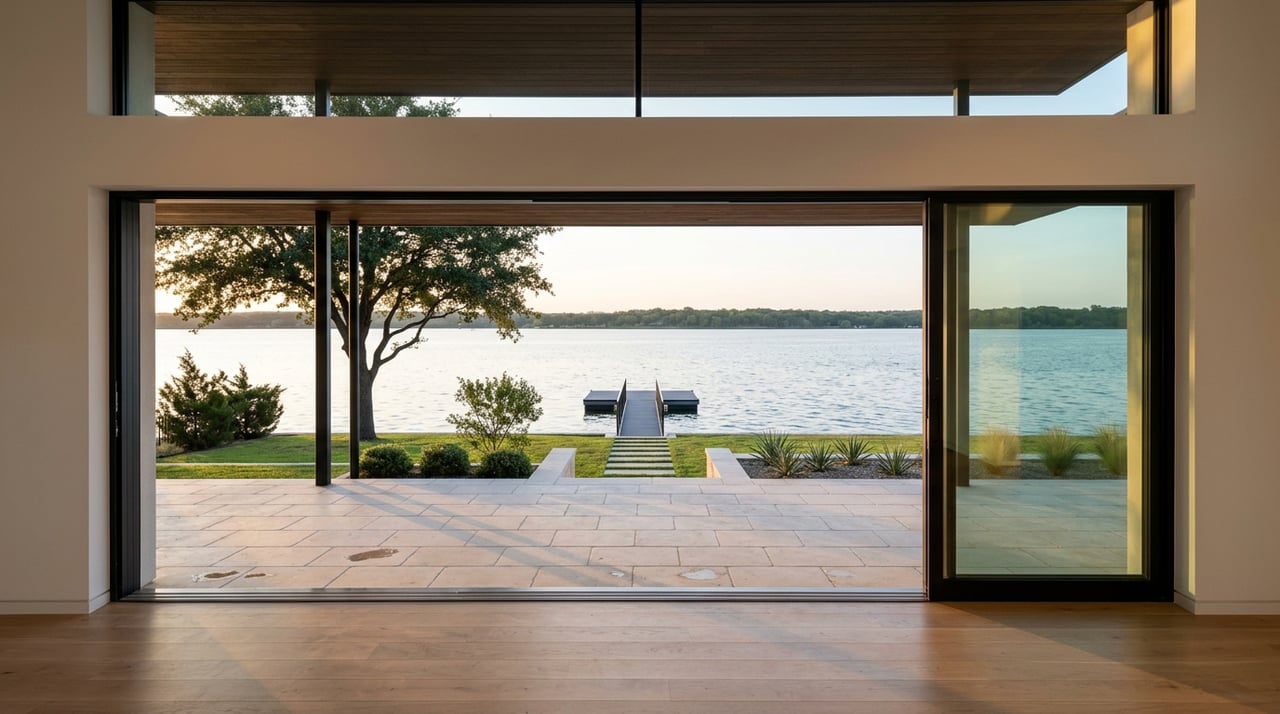
A well-designed estate in Amarra should feel open without feeling exposed. The Barton Creek guidelines point to staggered siting and side-yard setbacks as important tools for privacy. That means the best design response is often more nuanced than simply placing large walls of glass wherever the views seem strongest.
Instead, you want to balance sightlines, sun orientation, neighboring homes, and outdoor living zones as one coordinated plan. In many cases, the right solution is to frame major views toward the canyon, golf course, or open space while carefully controlling side-facing windows, terraces, and service areas.
This is where site planning becomes as important as architecture. A home that is positioned a few feet differently on the lot can materially affect privacy, outdoor comfort, and the approval path.
Respect Trees and Environmental Conditions
In this part of West Austin, mature trees are often one of the property’s greatest assets. They provide character, shade, and a sense of permanence that newer landscapes cannot replicate. They can also trigger additional review requirements.
Austin requires tree review when trees 19 inches or larger are present on or adjacent to residential property. The city also notes that heritage live oaks 24 inches and larger receive added protection. If your lot includes mature trees, the design team should understand those tree zones before finalizing the home’s footprint, drive approach, or utility layout.
Environmental conditions can add another layer. Austin’s site plan requirements call for added documentation when a site is in the Edwards Aquifer recharge zone, a critical water quality zone, on steep slopes, or near wetlands. Depending on the site, that may involve tree protection plans, grading and drainage plans, erosion control measures, and environmental inventories.
Choose an Architectural Language That Fits Barton Creek
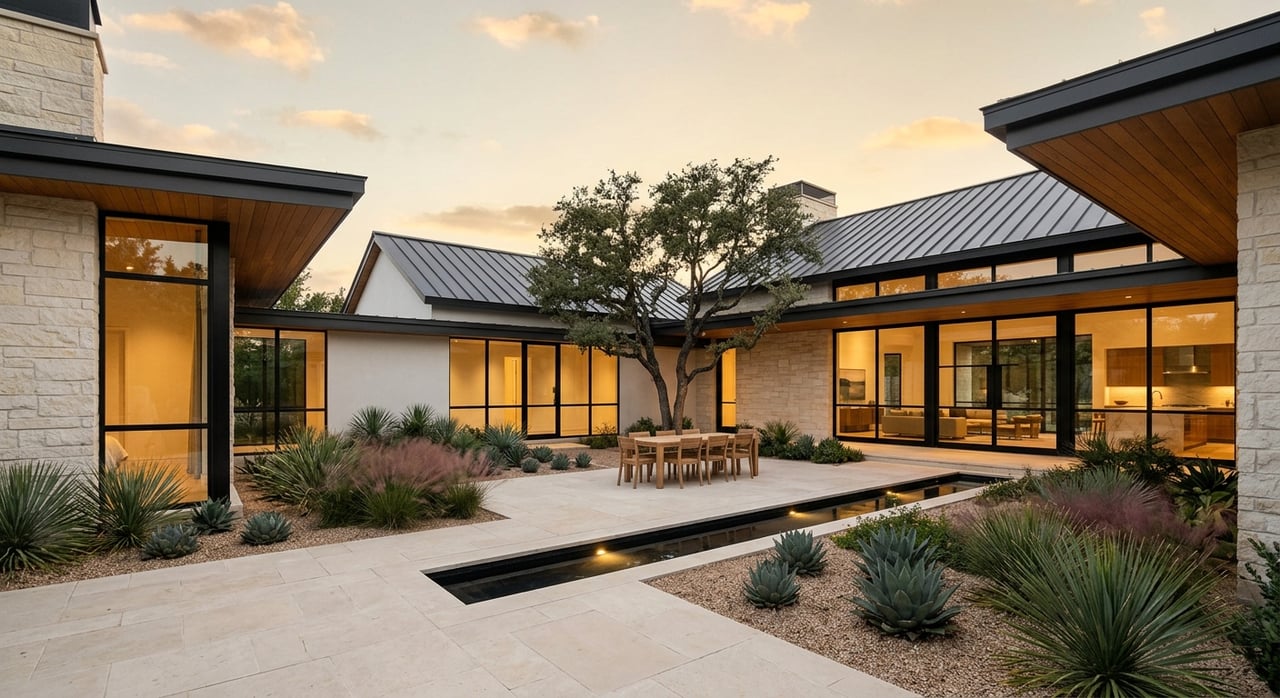
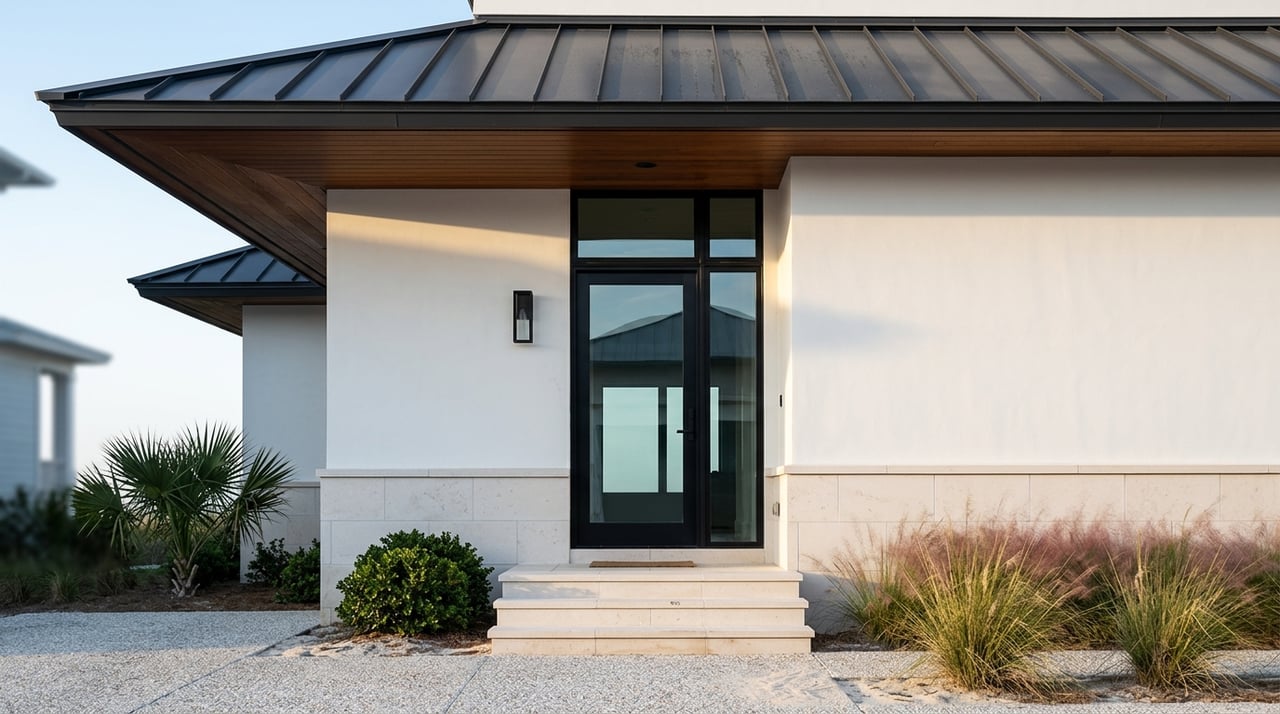
Barton Creek’s published design guidance favors a Hill Country architectural vocabulary. Native stone, masonry, stucco, muted roof colors, and roof forms that visually recede into the site are all encouraged. On golf-adjacent lots, stronger roof colors like red or orange may be restricted because they can stand out against the treescape.
That does not mean your home has to feel dated or overly traditional. It means the architecture should feel grounded in its setting. Clean lines, refined massing, natural materials, and restrained palettes often work best when they support the site instead of competing with it.
For a luxury estate, this approach usually creates a more timeless result. A home that feels native to Barton Creek tends to age better than one that ignores the land around it.
Prioritize Shade and Outdoor Living
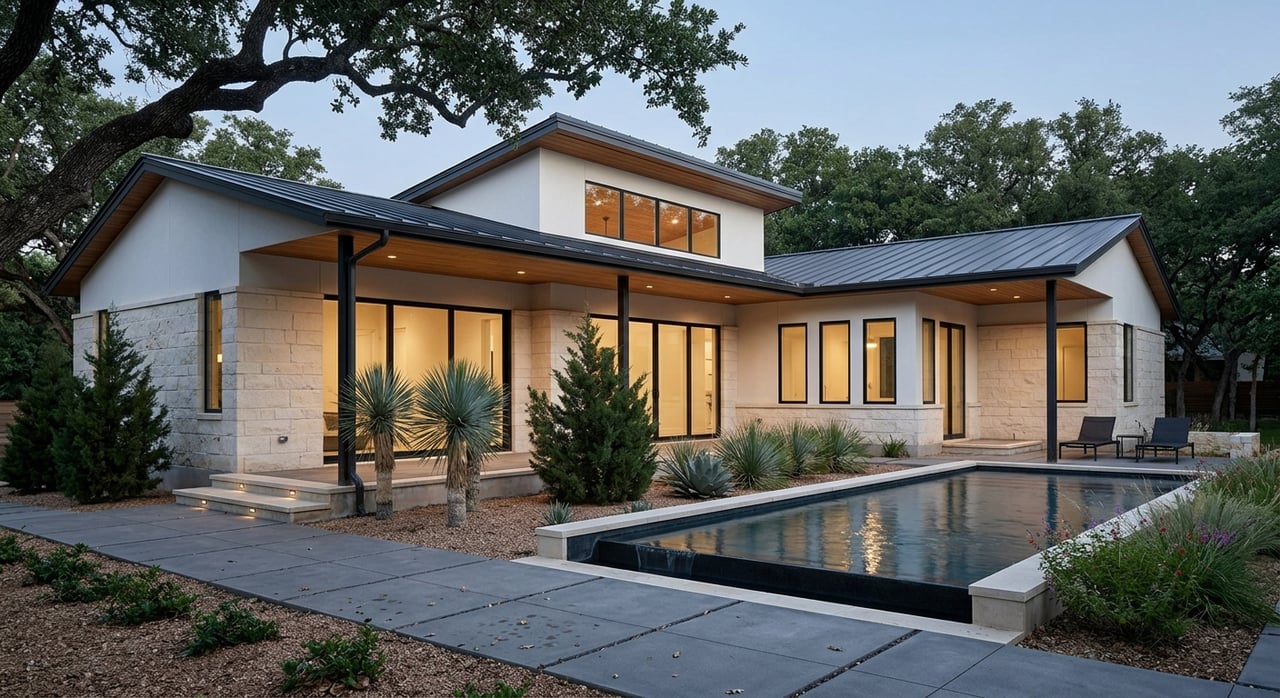
Outdoor living is central to the Barton Creek lifestyle, but comfort depends on more than adding a terrace and pool. The design guidelines generally call for substantial overhangs on west- and south-facing walls. They also encourage shading features such as awnings, trellises, and similar devices.
That guidance matters in daily life. Deep shade can improve comfort, protect interior spaces from harsh afternoon sun, and make outdoor rooms more usable across more of the year. In an estate setting, that often translates to covered terraces, outdoor dining areas, integrated lounge spaces, and poolside zones that feel like true extensions of the home.
The same principle applies to all exterior features. Barton Creek’s guidelines treat arbors, walls, trellises, decks, barbecue areas, and pools as part of the architecture, not as afterthoughts. The best estates make those elements feel intentional, cohesive, and built from compatible materials.
Handle Utilities and Equipment Discreetly
Luxury design is often defined by what you do not see. The Barton Creek guidelines state that exterior mechanical equipment, pool equipment, generators, meters, and similar items should be screened from view. They also note that pools should generally be below grade or use balanced cut-and-fill, and any required pool fencing or walls should be integrated into the overall design.
This is one of the most overlooked parts of estate planning. A beautifully designed home can lose its impact quickly if equipment pads, fencing, or exposed service elements interrupt major views. Thinking through those locations early helps preserve both the architecture and the landscape composition.
Let the Landscape Carry Its Share of the Design
In Amarra, landscape design is not just decorative. The Barton Creek guidelines encourage water-conserving native plants, minimal turf, hardwood shade trees, limestone and rock detailing, xeriscape principles, and low, downward-facing lighting. They also expect irrigation systems to be automatic and coordinated so runoff does not spill beyond the lot.
That creates a clear design direction. The landscape should support the architecture, respect the site, and respond to the area’s water-quality sensitivities. On golf-edge lots in particular, transitions matter, with guidelines calling for a gradual shift from more natural edges to more manicured residential planting.
A strong estate plan treats the house, pool, drives, terraces, planting, lighting, and drainage as one composition. That is usually where the property begins to feel finished, not just built.
Understand the Approval Path Before You Build
Barton Creek’s design environment is highly managed, and that is one reason the area remains visually cohesive. The published Barton Creek North MACC guidelines are a useful benchmark for the broader area, but the exact Amarra documents should control. Within that framework, no site preparation or construction can begin without written approval, and owners are expected to meet with the committee early in the process.
The review process is document-heavy. The guidelines indicate that a preliminary design submittal includes a fee, typically between $500 and $1,500, along with a complete plan package. The POA also states that approval typically takes 30 to 45 days after initial plans are received, and incomplete submittals are the most common source of delay.
Paper approval is not the end of the process. The guidelines also call for a foundation-forms inspection before the pour, along with ongoing construction inspections. If work diverges from the approved design, stop-work orders may be issued.
Remember That HOA Approval Is Not City Approval
Even after HOA or architectural committee review, you still need to satisfy City of Austin requirements. For new residential construction, Austin requires zoning review, and tree review is required when regulated trees are present. If protected trees are impacted, a Tree Ordinance Review Application may be needed through Austin Build + Connect.
Depending on site conditions, city review may also involve environmental documentation tied to slopes, aquifer-related conditions, drainage, or water-quality concerns. That is why custom home planning in this area should be approached as a layered approval process rather than a single permit event.
When those layers are handled early and in the right order, the project tends to move more smoothly. When they are treated separately, the risk of redesign and delay rises quickly.
A Practical Sequence for an Amarra Estate
If you want to reduce friction, a simple sequence works best:
- Verify the exact restrictions for the specific Amarra lot.
- Complete the boundary, tree, and topographic survey.
- Map views, tree protection zones, setbacks, and golf or open-space buffers.
- Test the home’s siting, massing, and outdoor program against those realities.
- Finalize the architectural and landscape package.
- Move into HOA review, city permitting, and construction with aligned documents.
This sequence reflects how the official review and permitting layers work in Barton Creek. It also explains why a single accountable design-build team can be especially useful here. When lot evaluation, architectural coordination, permitting, landscape planning, and construction are aligned from the beginning, you reduce handoffs and improve decision quality.
Why Coordination Matters More Than Ever
Designing a custom estate in Barton Creek Amarra is a chance to create something lasting. But in a setting shaped by topography, golf frontage, mature trees, preserved land, and layered approvals, success depends on coordination as much as creativity.
The right team helps you evaluate the lot, interpret the governing documents, shape a home that belongs on the site, and move through approvals with fewer surprises. That is how you protect both the vision and the experience of building it.
If you are exploring a custom estate in Barton Creek Amarra, working with a senior-led design-build partner can bring clarity from the first lot walk through final delivery. To start a conversation about your project, connect with David Lyne.
FAQs
What makes Barton Creek Amarra different for custom home design?
- Barton Creek Amarra combines scenic Hill Country land, golf and open-space adjacency, mature trees, and a layered design-review environment, so your home must be planned around the lot as much as around the floor plan.
What should you review before designing a home in Barton Creek Amarra?
- You should confirm the exact deed restrictions, HOA rules, setbacks, landscape limits, tree conditions, and any golf-course or open-space buffers tied to the specific Amarra lot.
Do Barton Creek approvals replace City of Austin permits?
- No. HOA or architectural committee approval does not replace City of Austin zoning, tree review, or any required environmental review tied to the site.
Why are surveys important for a Barton Creek Amarra estate?
- A boundary, tree, and topographic survey helps define the buildable area, identify protected trees, understand slopes, and guide decisions about privacy, views, drainage, and siting.
How should outdoor living areas be designed in Barton Creek Amarra?
- Outdoor spaces should be treated as part of the architecture, with substantial shade, compatible materials, careful privacy planning, and integrated features such as terraces, pools, trellises, and landscape transitions.
Why does a design-build approach help in Barton Creek Amarra?
- Because the lot evaluation, architectural planning, landscape design, HOA review, city permitting, and construction details all need to stay aligned, a single accountable team can reduce handoffs and limit delays.